All posts by peteradmin

ABOUT PETER M. ROJCEWICZ, PhD Peter M. Rojcewicz, PhD is an executive leadership consultant, higher education administrator and teacher, folklorist, poet, noetic literacy theorist, and scholar. He has researched international stories, beliefs, and manifestations of the mythic imagination. Trained in folklore and folk life, English and American Literature, and Jungian depth psychology, he is a recognized authority on archetypal images and symbols found in art, religion, dreams, and mass media. He has taught global humanities, fairy tales, myths, folk and popular belief systems, and arts education. Peter served as Provost and Accreditation Liaison Officer, Pacifica Graduate Institute, Santa Barbara, CA. He is also former Chief Academic Officer University of the West. He served as Vice President of Academic Affairs and Dean of Faculty, Antioch University Seattle and Dean of the School of Holistic Studies, John F. Kennedy University, as well as Professor and Chair of the Department of Liberal Arts at The Juilliard School. He received his doctoral degree in Folklore & Folk Life from the University of Pennsylvania where he earned the Dean’s Award for Distinguished Teaching. He has published scholarly articles on supernatural beliefs and related anomalous experiences based on interviews and field study. His folklore scholarship on the enigmatic Men in Black phenomenon is highly sighted in the social science literature. His folklore scholarship has been recognized by the Fourteenth Dalai Lama who invited him to speak at a private conference held in his residence in Dharamsala, India. A frequent speaker on arts education and noetic extra-rational learning, Peter has lectured on the role of the imagination and poetic knowing in higher education at the Royal Society of Arts, London, and Cornish College of the Arts, Seattle, and The Juilliard School. A long time member of the Columbia University Seminar on Innovation in Education, he has published and lectured on holistic approaches to education, focusing on multiple learning styles that expand the notion of intellect to include judgment of the senses through the arts and humanities that nurture body/mind/spirit. integrity. A recipient of the Worcester Poetry Prize and the Allen Ginsberg Prize: Honorable Mention, his poetry has appeared in literary journals and magazines, including Knock, Rattapallax, Tendril, Worcester Review, Paterson Literary Review, Penn Review, and Gargoyle.  

DWELLING IN ART – When the Body Understands What Intellect Cannot

Peter M. Rojcewicz, PhD

Lucca, Italy

Noetic learning gained through the arts is direct, non-propositional, and non-explicit understanding that precedes explanation. Learning and knowing that are noetic are important elements of our immediately lived experience, prior to all analytical thoughts about it. The noetic voice of thought is intimate with poetry and art. In the late Renaissance, Giambattista Vico proclaimed “verum et factum convertuntur,” meaning “the true and the made are convertible” (Berlin, “Vico & Herder”). Reacting against the rationalism of Descartes, Vico believed truth is not a matter of discrete, ontic ideas but derives from our manifold acts of creation. From that generative perspective, human truth includes history, philosophy, literature, poetry, as well anything else people fabricate or fashion. Artists, and other makers of things, can comprehend their creative products in direct noetic ways denied to mere observers at a distance who are not immersed in the creation. The knowledge of an observer of the external world differs in principle from the insider’s non-discursive knowledge of the artifacts we create, and which ostensibly follow principles we ourselves impose. The arts and humanities position us well to bring deep focal “attention to the epistemic resources involved in implicit understanding and knowing” (Alexis Shotwell, Routledge, 2017:79). Let us briefly consider the knowing demonstrated by artists.

Music composers know deeply the reality of sound structures, musical patterns, aural processes, and a broad range of rational relationships within their aesthetic choices and critical somatic decisions. What musicians, and artists in general, create as their art can be known in the “superior ‘inside’ fashion,” for which “knowledge of the external world cannot possibly be the paradigm” (Berlin, “Vico & Herder”). Musicians-singers, dancers, and actors creatively employ the body to think critically and make decisions in the medium of sound, and not simply about sound in order to intimately experience aesthetic values and passions.

In this poetic process of knowing, the arts can be seen as continuous with conventional knowledge, including the sciences. Creative people in all fields demonstrate a broad-based literacy beyond written language and numbers, joining discursive and non-discursive knowing, as well as abstract and embodied learning. The images of each artistic ‘language’ mysteriously prepare the mind for significant conceptual and perceptual cognitive acts. The psyche’s generated images constitutes the body-mind’s fundamental means of knowing; no cognitive operation is more important to consciousness (Hannaford, “Smart Moves”) than image making. Unique forms of learning emerge when lived experiences provide, confirm or modify images of self and planet. Not simply metaphors for thoughts, images of the psyche are essential to how people acquire, structure, retrieve, and apply information. Margaret H. Freeman (“The Poem as Icon”) understands “cognition as the sensory-motor-emotive-conceptual processes of ‘minding’ and the aesthetic faculty as the processes of attention, imagination, memory, discrimination, expertise, and judgment that underlie all human cognition, including the arts and sciences.”

The best scientists, like artists, value imagery in their most significant work. Jerome Friedman knew scientific “Reasoning is constructed with movable images, just as poetry is.” A vision of molecules forming the archetypal image of the uroboros snake led to Frederick von Kekule’s discovery of the six–carbon benzene ring. Significant insights and innovation often result from the generative synthesis of poetic images and reason. Whether we look to art or science, it is clear that new learning and knowledge rest upon interrelationships between distinct clusters of multi-sensory images in the body-mind. The best artists and scientists integrate intuition and unconscious processes with mental skills, including accurate observation, spatial and kinesthetic thought, identification of key parts of a complex whole, and recognition or invention of patterns governing systems (Root-Bernstein). In the present indeterminate world where predictability seems impossible, noetic literacy helps reveal subtle states of order challenging chaos and reducing cultural entropy. When schools integrate curricula with STEM-based elements with the arts and humanities through complex, creative work, people achieve an “existential intimacy of learning” with their all-sided humanity (Rojcewicz, “Existential Intimacy of Learning”).

To understand the meaning of a mathematical theory, a symphony, a sculpture, or a poem ultimately requires ‘dwelling in them’ (Polanyi, “Tacit Dimension”). That is to say, an astronomer, music composer, sculptor, or mathematician necessarily ‘dwells’ in experiences of science, music, or mathematics to obtain unmediated insider knowledge that is its ‘truth’. Immersed in their respective domains, each overcomes a sense of an autonomous self and ‘surrenders’ to art works in order ‘to live in them’ (Polanyi, “Personal Knowledge”).

With the exception of the field of embodied cognition, rarely is the question asked, “Is our body learning?” Albert Einstein lived that question. By imagining he could travel with a beam of light at 186,000 miles per second, Einstein acknowledged the key role bodily-kinesthetic and visual images played in his Gedanken thought experiment. Once asked to identify the nature of his consciousness during moments of noetic insight, Einstein did not describe his awareness as either algebraic or geometric. He pointed out that his moments of radical creativity possessed a noetic element of “the muscular type” (Brian Swimme, “The Hidden Heart of the Cosmos”). When contemplating the inscrutable Milky Way, Einstein did not envision it separate from his body-mind instrument, but experienced it directly, as if in intimate communion with the “Old One,” as he poetically referred to the galaxy. He described his noetic insight into the structure of space-time as not only transforming him mentally, but also physically and poetically.

The primary goal of muscular, hands-on participation in the arts, as in the sciences, is achievement of a profound ontological shift (i.e., metanoia) of a participant’s fragmented perception away from one sided thinking, judging, acting, or merely acquiring an artistic métier and toward an embodied cognition of self. “The symbols of the self,” wrote C.G. Jung (“Special Phenomenology of the Child Archetype”), arise in the depth of the body, and they express its materiality every bit as much as the structure of the perceiving consciousness.” Immersed in the arts our autonomous self-agency is suspended and the ‘subjectivity’ inscribed in the arts comes forward as a generative ‘Other’ we engage with our body-mind and by which consciousness is transformed.

The intelligent body is the quintessential instrument of all intellectual and practical knowledge (Polanyi, “Tacit Dimension” 1967:15). Dancers, as well as actors, musicians, and crafts people, utilize somatic ‘body in the mind’ intelligence (Lakoff and Johnson, “Philosophy in the Flesh”) to realize creative goals and personal aspirations. From that perspective it is fair to say we learn and know in and through the entire body and not merely the brain. It is through our awareness of the body’s contact with things that we are able to attend to the world. Yuasa Yasuo stated, (“The Body: Toward an Eastern Mind-Body Theory”) that “true knowledge cannot be obtained simply by means of theoretical thinking, but only through ‘bodily recognition or realization’ […] that is, through the utilization of one’s total mind and body (quoted in Erin McCarthy, “The Knowing Body” ).

Because it involves unconscious processes, non-discursive knowledge defies precise description in words (Langer, “Problems of Art” 1976: 163-180). Moreover, physically observing dance involves more than visually viewing the beauty of form and design. It demands we intuitively grasp the multivalent potentiality of bodies in motion. Dance activates in us primal understanding of trans-rational kinesthetic knowing. Dance releases deep muscle memory of performers and audience that activates the body’s internal sense of patterned response. It is also true that painters ‘think’ critically in and through color and paint and not numbers or words. Abstract artist and master arts educator Mike Grady addresses the subtle somatic nature of his creative process in this way,

“As an artist my insights are visible, material, and tangible rather than linguistic. They are made to be experienced directly [by the body] rather than simply discussed. I use canvas and paper with acrylic to create abstract color-fields which contain calligraphic ‘events’ rather than language or explicit images” (Grady, “Commentary to Lionel Yang in Lionel Yang, “Tao Consciousness”).

The body understands what intellect cannot. When we listen to music or engage dance or art in general, a new kind of worldly interaction and a new subjectivity (i.e., Being/ontology) come forward. According to Elizabeth Grosz (“Volatile Bodies”), our psycho-emotional ‘subjectivity’ is not strictly an ‘inner’ reality but rather emerges from ongoing engagements of the unique conditions of the physical body with the environment, forming an inter-sensory intimacy of subjective and objective interactions with the world. The African Bantu word sikia refers to somatic/auditory knowledge. Among the Bantu, visual, musical, and kinesthetic perception equals visual, musical, and kinesthetic thinking. There is no specific Bantu word for “listening or hearing” – because it wouldn’t capture the integrated knowing that occurs. Sikia means that one sees, listens, moves, understands, and dances to music as a unified experience. For the Bantu, there can be neither meaning nor reality divorced from indivisible sensory participation in a group.

In any performing arts ensemble, as in nature, a tendency exists toward entrainment (Nachmanovitch, “Free Play”), that is, the synchronization of two or more rhythmic systems into what is virtually a single pulse. This alignment is a prime example of ‘analogical correspondence’ (Bjorkvold, “The Muse Within”). For example, in art making – as in children’s play ‐ music, thoughts, words, songs, feelings, and the entire spectrum of bodily‐kinesthetic movements integrate analogically with the entire neural network as different learning modalities of the artists’ total experience; forms of creative expression unite with forms of learning. In such moments of intuitive insight, there emerges a recursive ‘biocultural’ (Edith Cobb, “The Ecology of Play”) interface of body-mind-world. Mind extends beyond the body into the social environment, just as ideas extend the mind into the somatic environment.

This biocultural link is a form of natural care, reciprocity, and mutual ecological respect between human and humus. David Abrams comments on that reciprocity, “Genuine art does not stifle the nonhuman element but, rather, allows whatever is Other in the materials to continue to live and to breathe.” He continues, “In return, these materials contribute their more-than-human resonances to human culture” (Abrams, “The Spell of the Sensuous”). The synchronization of the body-mind’s focus with its artistic function creates moments of indivisible unity of self, setting, and performance. Somatic and musical synchronization is noted by international teaching-artist specialist and author Eric Booth regarding the El Sistema Venezuela orchestra instructors who, rather than establishing norms for bodily movement during performances, merely allow that movement to emerge from the priority of emotional connection to the music. The result is the formation of El Sistema orchestras that “move more like fish in the flow of the music.” 12  Following the work of Csikszentmihalyi (“Flow”), neuroscientist Julia F. Christensen defines ‘flow’ as “a fleeting, immersive state in which time and space seem to compress or expand, accompanied by a delicious fusion of movement and awareness – where you don’t just move: you are the movement” (“Ingredients for Brilliance,” Aeon 9 June, 2025).

Entrainment, analogical correspondence, reciprocity, and flow mark a tacit learning and knowledge-construction through immersive participation. Such interactions of indivisible mutuality involve one’s entire Being. El Sistema’s orchestral children play, learn, and think in “ecological totalities” (Cobb, “The Ecology of Play”). Observers have noted how audiences move physically and emotionally to cadences of musicians, poets, and preachers. Dancers, musicians/singers, and actors read subtle kinesthetic and proxemic cues and move increasingly in synch with the living pulse of the ensemble. Improvising musicians depend upon this natural resource to integrate their music, as they breathe, pulse, think, and act together. When singing in harmony, choral voices do not create an absolute uniformity of sound; they move in and out of each other’s frequency, always maintaining their vocal integrity (Nachmanovitch, “Free Play”).

The final example here of non-discursive corporeal intelligence to be discussed comes from China. The words ti-hui indicate that when involved in knowing and knowledge attainment, one has to use the body first, say, for example, with physical gesture or mime, and then, and only then, can the mental function of reflective thinking begin. Somatic researcher Richard Shusterman offers the concept of somaesthetics that “highlights and explores the soma – the living, sentient, purposive body – as the indispensable medium for all perception.” (see Shusterman’s quote in Jessica Hemmings, “Can That Be Taught? Lessons in Embodied Knowledge from Memoir Writing for Craft & Design Education” – published in Somaesthetics and Design Culture, edited by Balint Veres and Richard Shusterman (Brill: 2023). This authority of the body leads to what researchers in the field of embodied cognition describe as whole-body thought and whole-body thinking. The body is a fundamental “subject of awareness” (Abrams, “Spell of the Sensuous,” 59), an organic basis of thought and intelligence, possessing a sensual imagination (Abrams, “Spell” 47).

In summary, noetic cognition manifested through the arts is direct, intimate, and synthetic knowing through body-mind image making. As images constitute the “first matter” (i.e., prima materia) of consciousness, poetry is the original language of genuine thinking and the speech by which thought reveals itself to us (Heidegger, “The Thinker As Poet”). It has been argued here that noetic understanding is enhanced by immersion in or hands-on, inter-sensory engagement with the arts, that includes muscular reasoning among its diverse cognitive modalities. Joining the entrainment of the head and heart through art and art making restructures our humanity and overcomes the crude logic of body-mind dualism. During this time of human and planetary fragmentation, division, Othering, and self-commodification, art reconciles subject-object splits and discloses the sense, need, impulse, and thought of Being as an active presence in the world.

ON THE FRONTIERS OF BODY-MIND RECIPROCITY

Segment Four Human Completion Project

Peter M. Rojcewicz, PhD

Lucca, Italy

OLYMPUS DIGITAL CAMERA

What a delicious thing writing is – not to be yourself anymore but to move through the whole universe you’re talking about. Take me today for instance: I was a man and a woman, lover and mistress; I went riding in a forest on a fall afternoon beneath the yellow leaves, and I was the horse, the leaves, the wind, the words he and she spoke and the red sun beating on their half-closed eyelids, which were already heavy with passion. – Gustave Flaubert

Thought is a man in his wholeness, wholly attending. – D.H. Lawrence

I believe that experimental physics is about bringing abstract ideas to life, like artists. – Silke Weinfurtner

A poem mustn’t mean but be. – Archibald MacLeish

Ah, not to be cut off, / not through the slightest partition / shut off from the law of the stars. / The inner – what is it? / If not intensified sky, / hurled through with birds and deep / with the birds of homecoming. – Rainer Maria Rilke

I am the observed relationship between myself and observing myself. – Heinz von Foerster

 …Just as a lapis Philosophorum, with its miraculous powers, was never produced, so psychic wholeness will never be attained empirically, as consciousness is too narrow and too one-sided to comprehend the full inventory of the psyche. Always we shall have to begin again from the beginning… – C.G. Jung

_______________________________________________________________

Much of human consciousness consists of non-computable noetic insights.The term noetic from the Greek is used here to refer to mysterious forms of implicit, complete knowing through direct experience. Learning via noetic modalities ‘feels’ more like an unknowing and unlearning. They are moments of understandings akin to surmises or inklings. Noetic learning is akin to a ‘letting go’ of conventional structures and accepted definitions of orthodox knowledge, and a ‘letting come’ of emergent, implicit knowledge. Noetic insights may be inadvertently, aesthetic, tacit, and inexplicable and come from direct experience of hunches, dreams, revelations, and aha! moments. Noetic insights are unique and highly personal to the experiencer. Noetic knowledge is an apprehension of deep meaning of things that while fraught with mystery and profundity, are nonetheless indisputably true. Noetic awareness is legitimate intuition-based knowing beyond linguistic and calculative forms and found plentifully in the arts and humanities. Because noetic knowledge is personal, informal, and interior, it is not ontic knowledge, that is, knowledge composed of easily separable elements isolated from ordinary, fluid, non-demarcated experience. Without clear phenomenological borders, noetic consciousness cannot be fully disclosed by narrative exposition or rational analysis. Noetic understanding is non-representational and cannot rightfully said to be ‘translated’ into other domains. Noetic literacies provide alternatives – or what cognitive psychologist Jerome Bruner refers to as ‘left-hand paths’ of creative departure from conventional ways of knowing and being ‘smart’ as found in our schools. The essential move here is to understand intuition as a cornerstone mode of noetic cognition and not simply a reaction to outer world stimuli.

Failure of schools to understand the viability of noetic intelligence withholds from noetic oriented students and faculty the opportunity to learn from others in epistemic communities of academic support. Lacking even a minimal epistemic culture for atypical learners, a deep distrust emerges between students and instructors, as well as within noetic learners themselves. Concerning the latter, this failure ultimately divides learners’ cognitive experience into valid/invalid categories and their essential identity into fragments that can have devastative implications. This is significant as the world we know and engage is a product of our thinking and knowing which themselves result from how we show up and engage the world. If our inner life detaches from our outer life, our heart from our head, or body from mind, we are broken people who drift from our true identity center. Individuation is forestalled or prevented. Furthermore, the presence of noetic learning in conventional school curricula built exclusively upon ‘cognicentric’ epistemologies, faces professional rejection. Unconventional intelligence or neurodivergent knowing isn’t recognized as valid by schools using traditional educational lenses. Consequently, noetic learners often face depression and anxiety in classroom and work environments .

Under my healing education umbrella, I envision noetic learners – students and faculty – employing a model of knowing whose dominant images expand knowing that results from the numerical symbol, the discursive word, and the observing eye toward the discriminating nose, the perceptive ear, the discerning tongue, and the accurate touch. Let us educate students to comprehend intersensory images across multiple channels of cognition to overthrow narrow consciousness and the orthodoxy of privileging one way of seeing and performing in the world. Possessing rich, multiple images of diverse groups and cultures is an aptitude essential to democratic cooperation, providing us opportunities in which to discern “the Good, the Beautiful, and the True” in various ways. If techno-scientific tools or digital and AI applications come between learners and their innate image-making powers, it can paralyze their mythopoetic insight to what of life lies beneath convention and norms. By giving over our image making capacity, we lose the cognitive capacity most fundamental to consciousness and personal agency. The result is a cataclysmic splintering of students’ inherent bundle of cognitive capacities, the loss of which contributes to the growing global mental health crisis facing education and all sectors of life.

Noetic knowledge straddles and blurs ontological borders – subject/object, interior/exterior, qualitative/quantitative – and is thus well suited to embrace oppositions and ambiguities of life. As such it bears a kinship with the transdisciplinary notion of the ‘included middle’ (Basarab Nicolescu, “Manifesto” 2002), representing a bridge across differences where opposing perspectives are neither absolutely true nor false and, thereby, capable of synthesis. This fact raises the issue of intersubjectivity. The logic of noesis is the antimonial both/and. Its rational and unconscious elements can neither be fixed nor discursively defined. Enlightenment legacy thinkers in today’s schools turn away from “…the discomforting co-existence of the rational and irrational, that includes the unfathomable, soul territory of all things,” (Elizebeth Nelson, “Research in Analytical Psychology”). Giambattista Vico held that one could ‘enter into’ and become ‘one’ with other cultures and histories via the reconstructive imagination of fantasia and, in that respect, he stood as “one of the true fathers of the doctrine of the unity of theory and practice (Isaiah Berlin, “Vico & Herder”). Artists often express their yearning for Otherness, for passionate, embodied fusion with that which is different or opposed to themselves. One thinks of Gustave Flaubert who realized in prose his yearning for imaginal intimacy, “I myself am Madame Bovary.”

Students of the arts and the humanities learn through literature and philosophy to cultivate the capacity to become the Other (Rojcewicz, “Beyond Othering” 2026 in press), entering into the imaginal life of literary characters, healing disjunctions between intuition and reason, logos and eros, learning and life. Arts and humanities integrate learners and the world as vital Other, bringing diverse powers from beyond the self into the self. There are two outcomes important to learning and self-understanding that result from this capacity to enter the reality of what we study. First, we bring our abstract thoughts and feelings out into the world in concrete artistic forms that allow for our clear viewing and interrogation. Secondly, we experience the object of our study as a living ‘subject’, or ‘presence’ that is our ‘teacher’. In the first case, we step away from our subjectivity, concretizing our ideas, feelings, or aspirations through our study materials and gain distance of observation. For example, if a student with inchoate childhood fears writes a poem about them, structuring elements of their inner life through persona, sound, rhythm, line break, stanzas, and the expressive use of metaphor and symbol, a degree of control over those fears ostensibly occurs. Because the poem gives form to content of their interior life, students learn about themself as a person and a learner, developing an intrapersonal intelligence. In addition, the palpably formed contents of our inner life as an artifact may now be of value to others and beneficial to society.

The second consequence of an intuitive identification with one’s study-object is an intimacy with and a healthy respect for what is Other and everything that is not myself. By penetrating the exterior surfaces of people and things, we gain imaginal access to them with our discerning hearts, able to love who and what is studied, and tacitly understanding what we learn. Through use of the cognitive imagination, students interiorize a poem and think and feel and move in image, sound, and rhythm. They participate mentally and bodily in the imaginal reality of the artwork as an experience of whole knowing. To ‘know’ a subject matter like art in more than a factual sense, we imaginatively engage it as a living consciousness. In this way, noetic learning is not exclusively a matter of information acquisition, but a matter of intuitive vision (cf., Plato, “Republic,” 518b). As such, the instrumentalist facing a Mahler score perceives the work as a vital breathing subject. Before striking a first note, the noetic musician implicitly asks of the score, “With your permission,” humbly requesting entrance into the life of the work. Abstract music is then ‘felt’ to be a kind of ‘affecting presence’ (Armstrong, “The Affecting Presence”), more akin to a living entity and creative intelligence, imbued and supported by the investment of consciousness of musicians who over the years have poured themselves into the life of the musical score through their performances.

Similar to that process of noetic understanding, Vico posited the existence of the ‘reconstructive imagination’ or fantasia, a self-creating power of humanity to ‘enter into’ the mental life of other cultures, histories, and perspectives unlike our own which only the imagination can realize (Isaiah Berlin, “Vico & Herder”).

If student and faculty learners are unable to discern the deep interior dimensions of the world as part of their overall knowledge, directly identify with it, understand what they learn as an organic part of an embodied whole, then their world lacks meaning, their schooling is lifeless, their humanity diminished. Schools must design programs to develop and celebrate the imagination, extending the mind beyond abstract reasoning, digital tools, and technical skills. Learners need to be nurtured as fully animated and embodied thinkers, capable of an intimate participation in life, rather than simply casual observation. John F. Gardner (“Education in Search of Spirit,” 1996) insists that “when knowledge is on-looking rather than in-working, there can be no flowing of the self into another, or of the other into the self.” When learners creatively think with critical and disciplined feeling, they can intuit their study-objects – people and things – in terms of their inner spirit. Gardner insists that only when students can find the subjective in the core of the objective and the objective in the heart of the subjective empowered by a feeling and spirited intelligence can diverse Others have personal meaning for learners.

What follows below are several examples of intimate, transformative participation with Otherness, characteristic of noetic fantasia (Vico) through the arts. In the line quoted below, American poet Walt Whitman presents an ontological fusion between the poem’s ‘child’ as a perceiving subject and unnamed objects perceived in the world. Subject and object begin and end along the same border, as that state of Being is a holistic ‘both/and’ condition and not a dualistic ‘either/or’ condition of binary dualism. No confusion of separateness here. Whitman writes,

“There was a child went forth every day/And the first object he looked upon, that/object he became/And that object became part of him.”

Becoming the Other is an achievement of an ‘ontological peace’, that “refers to an absolute acceptance of all that which is as it is without such dualisms as good or bad” (Yoshiharu Nakagawa “Education for Awakening”). The noetic consciousness of artists has often been described as ‘child-like’. “Elementary school children,” observes educator John F. Gardner (“Education in Search of Spirit”), “are not fully internalized as subjects, and the world has not been fully externalized as objects.” Cognitive psychologists agree that the mind is inherently embodied; thought is largely unconscious; and abstract concepts are fundamentally metaphoric (Lakoff & Johnson, “Philosophy in the Flesh”). One could ostensibly claim that the embodied mind of Whitman’s ‘child’ is both sensing and sensible, capable of direct synthetic knowing of the intersubjectivity of objects. The same is true for artists and learners.

Students are themselves their primary ‘instruments’ of knowing and expressive activity. That learners themselves are their fundamental ‘instruments’ is obviously true for dancers and actors. It is equally true for musicians. Their violins and cellos are but material extensions of the psyche. Carl Erik Grennes hits the mark by stating, “One cannot correctly describe a musician’s relation to his/her instrument in terms of the body manipulating a physical object,” (quote taken from Jon-Roar Bjorkvold, “The Muse Within”). He asserts that that the “body and instrument constitute a system that collectively exhibits the property of mind.” Musicians and their instruments, awareness and activity, are one. Musicians abide in a symbiotic, noetic state with their artistic instruments. A pianist’s fingers hear music as they contact the black and white keys. A horn player’s lips call forth the creative musical potential of the horn. The instrument and the musician become a single entity in the cooperative act of music making. Similarly, only those learners who are consubstantial with their body-mind-spirit instrument are ‘tuned’ for disciplined and integrated sensing, thinking, and learning as whole knowing. This is a form of poetic intelligence manifested by writers, artists, and other creative people. They experience intersensory penetration of the subjectivity of the objective world and objectify their interior life through use of their artistic materials.

Sensations of touch can be presented by novelists to readers aurally and sound rendered through a tactile sense. Speaking of a work by Virginia Woolf, Camille Caprioglio notes that Woolf’s fiction shows an ostensible kinship with features of neurodiverse cognition, “Even sensations other than sight are rendered visually, so the reader sees what is heard of felt” (“A Poet on Mars,” Aeon, October 17, 2025). One can discern in Woolf a Proust-like trait of fading in and out of consciousness, alternating between stream of consciousness reflections and sharp observation of small details of the outer world, sometimes ostensibly merging with material objects, calling forth and ‘speaking’ out the concerns of their interior life as a form of her poetic intelligence. Michaelangelo is known for his noetic ‘seeing’ capacity. He created art via the physical powers of his visionary intelligence, a cognitive power he referred to as Intelleto (Nachmanovitch “Free Play”). By observing the first rays of the sun rising over the Carrara quarries, he proclaimed he could see a complete sculpture living whole inside the stone. He understood his art as a process of removing excess stone encumbering the artefact. Michelangelo rejected the popular mathematical emphasis on proportion in the name of ‘spiritual’ proportion. Geometry, mathematics, and the rules of perspective were for him useless without the observing eye, a special noetic ability for discerning beauty and harmony by seeing through the surface and the apparent.

Similarly, the sage Taoist Chuang Tzu identified the premier woodcutter Ch’ing as possessing similar perceptual and productive powers. In order to make an artful bell stand, Ch’ing would fast for seven days to overcome automated thinking and assume a mind beyond thought of praise, blame, or reward. With his mind and skills concentrated and all outside distractions vanquished, Ch’ing entered the mountain forest in equanimity to examine the heavenly nature of trees: “If I find one superlative form, and I can see a bell stand there, I put my hand to the job of carving; if not, I let it go.”Ching’s fasting to concentrate his skills and overcome distractions mirrors mindfulness meditation practice of focused awareness on an object that results in the dissolution of the subject-object split and the realization that a subject observing an object cannot be located. Ken Bradford maintains, “As the everyday object-subject split dissolves, undivided awareness relaxes into empty-open nature…” and “lifts the obscuring illusion of a separate selfhood, as the fullness of Being recognizes its true nature” (Ken Bradford “Mindfulness and No-mind Fullness,”, Mountain Stream Meditation, 11/24/25 livestream; see his book “The I of the Other”). This noetic capacity for insight beyond the illusion of an autonomous self is fundamental to an artist’s way of knowing. It is a non-striving ease of ‘flow’ wherein one faces no discernible subject-object, only the One of unity. The monism featured in the Whitman line above (i.e., “There was a child went forth evert day”) is echoed in the following lines, first from Wallace Stevens and, secondly, from Plotinus.

“One must have a mind of winter to regard the frost on the boughs of the pines crusted with snow.”

Here, Stevens depicts a moment of noesis, featuring an indissoluble ontology between the body-mind intelligence of the poem’s speaker and the natural world. “We are not a part of the whole, we are the whole” (Helminski, “The Knowing Heart”). No slick Cartesian dualism separates human from humus. A wholly objective and transcendent reason separate from the environment is an erroneous product of an outdated model. Once asked to identify the nature of his consciousness during moments of noetic insight, Einstein did not describe his awareness as either algebraic or geometric. He said his moments of radical creativity had a somatic element of “the muscular type” (Brian Swimme “The Hidden Heart of the Cosmos”). When contemplating the inscrutable Milky Way, Einstein did not muse upon it separate from his body-mind instrument, but experienced it directly in an imaginal manner, as if in communion with the “Old One,” as he called it. He described his noetic epiphany into the dynamics of the mega-scale structure of space-time as transforming him physically and mentally. That example indicates that noetic comprehension is omnijective, that is, neither wholly objective nor wholly subjective (Michael Talbot, “The Holographic Universe”), but an amalgam consciousness that defies normative categories, pointing to how much our tacit knowing is unfathomable and yet happens every day. Likewise, in the line to follow, Plotinus insists,

“No one ever saw the sun without/Becoming sun-like, / nor can a / Soul see beauty without becoming beautiful.”

Noetic insights are direct, experiential, non-explicit, and synthetic knowing that precedes explanation. Personal knowing moves us to the heart of our experience, and as we move outward from there, the perceived splits between soma and spirit drop away. Phenomenologist Merleau-Ponty spoke of the ‘embodied mind’ that is neither subject nor object but a ‘connective tissue’ or intermediate state joining the two (Sara Robinson ‘Body dwelling mind’). On this point, Nobel Prize recipient and geneticist Barbara McClintock insisted that researchers must take time to ‘look’ into and ‘listen’ to what one’s materials of study have to ‘say’ and must necessarily possess a ‘feeling’ for the organism as a form of openness to “let it come to you.” (in Evelyn Fox Keller, “A feeling for the Organism” 1983, quoted in Parker Palmer, “The Courage to Teach” ). Creative scientists like McClintock demonstrate the value of logic and data together with direct intersensory knowing of content that is ontologically inseparable.

Noetic extended sentience is a wisdom older than the cerebral mind, deeper than words or numbers (Abrams, “The Spell of the Sensuous), and more inclusive than the enframing (cf., Heidegger) of technology (Richard Rojcewicz, “The Gods and Technology,” pp. 103-5). It is wrong-headed to believe that our senses are distinct and unrelated to one another and the earth we perceive. Alfred North Whitehead pointed out, “For the very meaning of things known is wrapped up in their relationships, beyond themselves” (quoted in Elizabeth Coleman in “Teacher-Scholar,” vol. 2, no. 1 Fall 2010 www.fhsu.edu/teacher-scholar). As we step up and into direct human experience, Abrams notes we start “to live the unique outputs of our eyes, ears, nose, and skin, we experience the full participation of our sensing body with the sensuous world” (Abrams “The Spell of the Sensuous). In John Moffet’s lines to follow, it is understood that one’s intrinsic identity is largely shaped by the reciprocity of sense-making of the embodied mind and our intersubjective engagements with the world:

“To look at this green and say, I have seen spring in these / Woods will not do-you must / Be the thing.”

In each example above, deep understanding requires both imaginative and rational cognitive functions. My theory of Healing Education re-conceptualizes in practice the primary relationship of thinking and knowing to doing and Being. Our reflection by means of images and ideas is a substantive action, and action itself is a significant image and idea. Actions always express and concretize content of the body-mind. To assume their false dichotomy is to assume a broken self. The speaker of Moffet’s poem insists that comprehension of the relational identity of a human and the more-than-human world of the springtime woods depends on intersensory ‘seeing’ and ‘speaking’. The ancient Greeks referred to such perspicacious insights as episteme and held that it was the polar opposite to inferential reasoning. For Greek philosophers, Episteme was a visual intelligence, a beholding, or direct perception of things, not a calculative reasoning, and could not be brought forth at will (Arthur Zajonc, “The Heart of Higher Education,” p. 96). Likewise, tribal shamans, in their roles as wisdom carriers of indigenous lineages, assume intimate, immersive identifications with nature’s ‘animal powers’ that assist them in healing, hunting, teaching, and advising community members (Harner, “The Way of the Shaman”; John Grim, “The Shaman”). It is also the case that contemporary neuroscience notes a special mental state defined by “a serene presence,” where one floats in the moment, “simply being” (Christensen, Aeon, June 9, 2025).

In the Neo-Platonic sense, to know something is to become it. To ‘know’ is to be united with the known. The ancient Greeks referred to this oneness as gnosis or direct subjective knowledge from the inside of an experience or phenomenon and not simply objective observation from a distance. Yogic traditions refer to yukta or the yoking of splits between the knower and the known; this is a noetic consciousness of mind-body wholeness wherein understanding stops being conceptual and becomes lived. To ‘see’ spring, as in the Moffet line above, means to understand it phenomenologically, as if ‘dwelling in’ spring (Polanyi “The Tacit Dimension”) as an equal participant with nature and not simply as a by-stander. Knowledge acquisition through the arts and art making unites our mind with both our artistic ‘object’ and our performance function of the body, forming a poly-perspectival consciousness of reality. To be the thing requires we necessarily draw a new circle to traffic the frontier of diverse perceptual and experiential worlds. Such transformations of our intrinsic Being result from intuitive signals, gut feelings, hunches, markers, revelations, and arts immersion. To become what currently we are not – i.e., the Other – means experiencing a shared noetic modality or ‘heroic mind’ (Vico, “The Heroic Mind”) able “…to lead ourselves beyond our believed capacities, to enter areas of thought for which we do not think ourselves prepared” (Verene, “Vico’s Science of Imagination”).

Unlike the crisis of rapport brought about by the Othering of noetic ways of knowing currently taking place in schools, artists and all cultural creatives share an ontological relationship of ‘adoration with the Other’ (I. Livingston, “Unconscious Roots,” p.175). One such cognitive Other related to the essence or Being of learners is the physical body. The organ of the brain undergoes constant shaping and change by our daily actions and engagements in and with the world. Melanie Challenger understands,

“Once we decide that the mind is the real human and the rest of the body only hardware, it becomes easier to disregard the physical work, including the neurocognitive work of a biological brain, through which we move, find our way, put thoughts into words, and recognise our own needs. A machine may do some of that work faster, but each act it takes over is one that the body no longer performs and that the body, including the brain, no longer learns through. The irony is that a project motivated by the desire to overcome bodily fragility is helping to produce more fragile bodies…” (“Deskilling the Body,” Aeon Friday Oct 16, 2026).

Challenger insists AI is only the latest manifestation of the ancient impulse to bypass the material body. Similarly, Eric Booth points out how the body and its somatic cognition are essential to knowing via the arts and absent from AI:

“AI is all head, no body. Communication, understanding and learning are all deeply embodied, and engaging the artistry of learners activates multiple kinds of knowing. As every arts integration specialist, every teaching artist, every arts teacher knows—you get different answers and solutions, raise different/deeper questions and tap greater personal relevance and intrinsic motivation when the full range of human engagement is present” (“Doubling Down on What AI Cannot Do,” ArtsEd Amplified, 9/11/2026).

The arts and humanities lead to a trans-ontological apprehension of Being shared between items that previously were ostensibly discrete and separatebut now are experienced as consubstantial with themselves. The mutuality of presence leads to true knowledge that conjuncts the language of the body with the language of philosophy; here thought is physical perception, and body is simultaneously mind that speaks a language of polysyllabic, not monosyllabic knowing.

Noetic literacy discloses presence between and among things. Presence is a form of relational ‘betweeness’, a linking of ‘interiorities’ (Van Manen ) that bypasses the disjunction of atypical thinking, knowing, perceiving, and acting. Parkin points to the etymology of ‘presence’ that implies something both ‘deeply held’ or ‘inmost’ and something ‘given’ or ‘disclosed.’ Presence as noetic consciousness is a tacit state that is immanent and transcendent of us. Presence bears a close kinship with an extended sentience of compassion, caring, self-disclosure, vulnerability, or touch. Presence is a relational state of intersubjective and interobjective availability to life, allowing for a fluid ‘giving away’ and ‘coming back’ that discloses the communion of subject and object, self and other, unconscious and conscious mind, the personal and communal. This suggests the process of coming into psychological maturity that demands an archetypal death and resurrection depicted by the ‘hero’s journey’ (Campbell, “The Power of Myth”) of transformation of consciousness, wherein one leaves behind a one-sided and limited condition of life for a richer, more mature condition.

Noetic learning is mysterious. Learning via noetic modalities ‘feels’ more like an unknowing and unlearning. Noetic modes are akin to a ‘letting go’ of conventional structures and accepted definitions of orthodox knowledge, and a ‘letting come’ of emergent knowledge. Noetic ways of knowing are akin to an openness (Chinese yin) or a willing surrender to what spontaneously and mysteriously appears in the immediate learning environment. For example, the Zen way of art places great emphasis on the freedom of the artist from attachments, judgments, calculation, control, and expectations. Muge or freedom from fracturing wholeness, comes from recognition of non-dual reality (Nakagawa, “Education for Awakening”). In this state of freedom, the art, the artist, and the artmaking are indivisible. When possessing this consciousness of complimentary identity, life is art (Herrigel, “The Art of Archery”).

This state of body-mind freedom from an agenda of expectations or control is what Gerald May (“The Wisdom of the Wilderness”) calls ‘copelessness’, a highly productive, ready state of availability (e.g., Hindu sattvic) to whatever suddenly comes forth. Copelessness means “directly knowing what is moment-to-moment without projection of acquired knowledge” (Krishnamurti in “Education for Awakening”). An artist, in the creative process, does not impose a wholly external form upon some ostensibly ‘inert’ material, but rather, allows form to emerge from a generative reciprocity between artists and materials (Abrams “The Spell of the Sensuous”), whether these materials be stones, or pigments, or words spoken or sung. As a noetic state, ‘copelessness’ is highly suggestive of what John Keats referred to as ‘negative capability’. Negative capability constitutes a via negativa to conventional knowledge but is a positive approach to what we don’t understand (Christopher Banford, in “Parabola,”). More than the ability to divest oneself of reaching for rational explanations or judgments, negative capability means being freely available to life’s mysteries, questions, paradox, doubt, awe, and not-knowing. Engaged teaching-artist Eric Booth (“Doubling Down on What AI Cannot Do,” ArtsEd Amplified, 9/11/2026) points to this noetic feature as a significant difference between knowing through the arts and the knowledge of artificial intelligence when he writes.

“AI can’t ‘not know’ well. It can fail to find an answer, but it can’t make productive use of uncertainty and ambiguity to find its way to discovery. Artistry comes to life in uncertainty. A good arts education teaches people what to do when they don’t know what to do, how to find delight in inquiry, how to navigate contradictions, how to find analogies, how to care about quality—recognizing ‘good enough’ and feeling the drive toward ‘better’.”

Suprarational noetic knowledge is fully real but not fully cerebral. It is mostly unrecognized by schools, since it emerges in contexts “of releasing the mechanisms in consciousness that need to be defined, to compare, to understand – in short, to defend one’s psychological territory” (Richard Moss).  T.S. Eliot (“The Four Quartets”) grasped the importance to creative insight of ‘copelessness’ beyond expectation, “Or when under ether, the mind is conscious but conscious of nothing -/ I said to my soul, be still, and wait without hope.” Atypical learners relinquish expectations of learning and knowing via conventional modes to allow emergence of their suprarational capacities indigenous to their authentic Being. Following May, Keats, and Eliot, my Healing Education project seeks to augment everyday knowing in the analytical ways of reason with diverse anomalous ways of understanding reality through unlearning, disclosure (i.e., aletheia: truth, unveiling), beholding, and emergence of what is hidden but real. Imaginative insight calls paradoxically for an appropriate constraint. The physicist Arthur Zajonc, in part following Rilke, declared, “We must pause and reflect before speaking, quietly engage the issue inwardly before acting, open ourselves to not knowing before certainty arises, as so we live for a time in the question before the answer emerges” (Zajonc, “The Heart of Higher Education”).

Creative power of art doesn’t stem from data, numbers, theories, or schemata; its insightful knowing is enmeshed in femur, sinew, and flesh and comes from the ‘felt’ participatory knowledge through extended sentience. Keats aspired to a direct, perspicacious access to reality via images. He says he is after ‘verisimilitude’ or likenesses (i.e., images) of truth. As ‘truth’ always eludes us, we must accept that our knowledge is forever incomplete and ‘truth-like’. Keats understands ‘intimacy’ not as emotion but as feeling, very close to ‘touch’ (cf. Banford, Parabola). Bruce Mangan, describes noetic insight as a ‘feeling of knowing’ to be understood as a diffuse, trans-sensory experience that includes a sensation of ‘rightness’ and, hence, ‘meaningfulness’ (Mangan, Bruce. 2001. “Sensations Ghost: The Non-Sensory ‘Fringe’ of Consciousness.” Psyche 7(18). Available from: http://psyche. cs.monash.edu.au/v7/psyche-7-18-mangan.html). Keats proclaimed,

“O for a life of sensation (i.e., Oneness or floating state – author’s emphasis) rather than thoughts.”

Smyth (cf., Smyth et al, 2008) understands negative capability as a “yielding which in turn yields what otherwise could not be gained,” that is, a “yielding state of letting come.” Negative capability in the particular and noetic literacy in general traffic in a world where suprarational meanings abide and emerge. The intimate, immersive participation of the embodied mind in the process of engaging with art or science activities accords with accounts of revelation and mystical experience (William James “The Varieties of Religious Experience”; Evelyn Underhill “Mysticism”). Having a mutual “mind of winter” (Stevens), entering the “first object looked upon” (Whitman), or “becoming the sun” (Plotinus) positions us to face a numinous, suprarational reality larger than ourselves and beyond our uniqueness or isolation from the world. As such, human beings are all of mysterious wholeness.

Some people refer to the mysterious nature of reality as God, ‘Mind at-Large’ (Huxley, “The Doors of Perception”), or the timeless and spaceless realm of Being. The ‘numinous’ (Otto, “The Idea of the Holy”) carries with it an autonomous and compelling sense of eternity and a power that seizes and enchants consciousness. The numinous transcends comprehension in rational and ethical terms and is accessed by a noetic modality Rudolph Otto also refers to as ‘feeling’, that has an objective referent he identifies as the ‘holy’. The holy is not simply a psycho-emotional state, but an awareness of ‘personal emptiness’ (i.e., “I am nothing; Thou art all”) before an awe-inspiring, transcendent reality felt to be separate but not separated from oneself (Otto, “The Idea of the Holy”) andthat can only be hinted at or suggested through mythopoetic images, symbols and ‘numina’ of the internal environment. Whatever its ultimate disposition, noetic encounters with the numinous are experienced as a majestas (i.e., majestic presence), a fellow ‘subject’, an ineffable daemon, or overwhelming Thou before whom we ‘shudder’. Such forms of noetic consciousness are to be recognized as authentic “faculties of knowledge and potentialities of thought in the Spirit itself” (James, “Varieties of Religious Experience”).

The numinous awakens both a cognitive predisposition different from normative rational faculties of knowing and establishes a new standard of evaluation of life (Otto, 15). For example, evolutionary cosmologists, Brian Swimme underwent a metanoia (i.e., mind-body conversion) of humanity’s interconnection to the Kosmos (Tubali, Big Think, 6/2/25). Similarly, the philosopher Materlinck, while in the Arctic circle, described a revelatory experience of the unity of subject/object consciousness akin to ancient and contemporary artists that he believes occurred “beyond the Polar circle of the mind… where the psychology of man mingles with the psychology of God” (quote found in Underhill “Mysticism”). In a similar vein, Nicholas Berdyaev wrote, “Creativity is a spiritual action in which a person forgets about himself, moves outside of himself in the creative act, absorbed by the task (“The Significance of Creativity”). By its very nature, art is spiritual in the sense that it engenders an expanded sense of self in dynamic connection with life. The delusion of a radical autonomous self is completely overcome via the living ‘energy’ and ‘urgency’ of the numinous and its ‘holy’ immaterial referent (Otto “The Idea of the Holy”).

Confronting the numinous influences our perception of the universe in all situations of life thereafter. We find we can no longer collaborate in good faith in the modernist project of fragmentation without betraying ourselves and living in bad faith. Through life-long immersion in arts and humanities, we enter into a noetic relationship with the common ground of a participatory reality between self and the world, “the underlying goal of Western intellectual and spiritual evolution (Tarnas, ‘Epilogue’, “The Passion of the Western Mind”). This is possible as the arts and humanities nurture our ability to handle paradox, contradiction, and opposition via images, metaphor, poetry, and indigenous narratives by making available to us the cognitive imagination that discloses unfolding depths of human and cosmological potentials. In his influential work, “In Over Our Heads,” Robert Keagan pointed out that a most significant move toward self-growth is the “subject-object shift.” By that he means gaining necessary objective distance on oneself that provides needed flexibility to handle the complex either-or issues of binary logic. According to Keagan, “You start…constructing a world that is much more friendly to contradiction, to oppositeness, to be able to hold onto to multiple systems of thinking…This means that the self is more about movement through different forms of consciousness than about defending and identifying with any one form.” (quote found in “Stealing Fire” ). This achievement of heroic selflessness and “the wisdom and power to serve others” (Joseph Campbell, “The Power of Myth”) occurs from immersive engagements with art, mysticism, nature, meditation, visions, prayer, psychedelics, and various forms of altered consciousness. Rilke, perhaps, said it best,

“Ah, not to be cut off, / not through the slightest partition / shut off from the law of the stars. / The inner – what is it? / If not intensified sky, / hurled through with birds and deep / with the birds of homecoming.”

Healing Education for Democracy

Peter M. Rojcewicz, PhD

Lucca, Italy

…blatant problems of American democracy are directly related to, if not rooted in…epistemological and spiritual problems…where aesthetic, expressive, and spiritual dimensions are chronically undernourished, if not actively suppressed by schooling. – J Miller

Since the ultimate authority of life lies within the individual, there is nothing more important in life than to develop the innate tendency of the psyche to realize its wholeness. The psyche demands to be developed and to be made whole; obedience to this command is the highest good and the ultimate concern of life. – C.G. Jung

At the deepest level, the creative process and the healing process arise from a single source. When you are an artist, you are a healer; a wordless trust of the same mystery is the foundation of your work and its integrity. – Rachel Naomi Remensee

For those who give primacy to Ultimacy, full human development is seen as not only needed for an individual, but for society as a whole. Societies need fully developed humans, because it is the heroes of virtue…who are seen as the well-spring of cultural and social renewal. – Scott H. Forbes

According to A. Maslow… metapathology [means] ‘Impairment of self-development due to the failure to satisfy basic needs’. In contrast to Maslow’s metapathology, I refer to all disturbances, both existing in general and specific to humans, as metapathologia. My definition: Metapathology is a philosophical and religious consideration that deals with the question of disturbances of being that go beyond, but also include, all individual phenomena. Short: Metapathologia is the study of all possible disturbances. – Torsten Oettinger

The search for truth is an essential element of democracy, which is itself a means of contributing to the common good. When questions about what is true lose their appeal, and a pragmatism takes hold that is content with what appears useful or effective, then democratic life is weakened. – Pope Leo XIV

___________________________________________________________________________

A healthy democracy requires its citizens to discern competing claims to truth, weigh contested knowledge, read images and symbols, and handle figurative and connotative language. To enhance the self-agency of engaged citizens, cognitive and epistemological pluralism must reside at democracy’s educational center. Education’s ongoing violent impairment of learning and disturbance of students’ sense of self can only end when schools adopt a guiding story of pluralistic intelligence that joins analytical reason with hands-on, inter-sensory engagements. To the grave detriment of learners, our schools at all levels impose pre-existing learning structures and classifications of exclusion upon atypical learners who contrarily learn and come to knowledge using intuitive, non-discursive modalities. Their personal knowledge and tacit learning are neither recognized nor valued within prescribed, compartmentalized school curricula. Stigmatized by their cognitive-typical peers, as well as by faculty and staff who tightly manage academic choke-hold structures, nonconventional learners undergo cognitive splits and suffer scarring of their distinctive epistemic being that may last a lifetime and thereby tragically contributes to the present global mental health crisis.

The shocking truth of the matter is our schools make cognitive fragmentation acceptable and impairment of mental and psycho-emotional fitness permissible. We must discontinue support of an exclusively narrow discursive and number-based educational model that, by itself, leads to stunted intellectual and emotional growth instead of individuated wholeness. The prevention of further mental health wounding caused by education is our dire ethical responsibility every bit as much as the restoration of well-being of those learners already harmed by schools.  We need an educational approach that enhances epistemological and cognitive diversity and is suited to enhance effective decision making, problem solving, and assessing contradictory claims to truth in a democratic society currently adrift. ‘Healing Education’ as discussed here is my human completion project, featuring “noetic literacy” and ‘cognitive imagination’ developed through the arts and humanities as effective means to nurture ‘all-sided’ citizens suited for responsible democratic participation. Non-propositional, nonexplicit noetic principles and values explored in this work are not intended to establish strict rules, a detailed roadmap, or a how-to, one-size-fits-all guide to holistic and integral curricula, pedagogy, and ways of knowing, so much as to provide a call across education for further epistemic research and collaborative development of an operative conceptual framework.

To stop education’s ongoing violent impairment of learning and disturbance of students’ sense of self, schools need a guiding story of pluralistic intelligence that joins analytical reason with hands-on, intersensory engagements. Schools need to orient learners not only to their important career-related mental capacities and professional skills but also to the strength of moral virtue, imaginative cognition, and individuation honed by the arts and humanities, that when wedded to the sciences, leads to wholeness. For this to occur, an imaginative exchange must exist at the core of education whose justification must be that it preserves the connection between knowledge and the zest for life by uniting what is traditional and what is emerging in an imaginative consideration of learning (Whitehead, The Aims of Education). Schools impart information, but fail to do so creatively. The proper center for any school is an abiding concern with valuing and developing the nature and diverse function of the cognitive imagination, the intuitive intelligence that is the core of all knowing, typical and noetic.

 A democratic society benefits when its schools embrace more than the intellect’s reduction to instrumental reasoning and economic rationality by increasing the diversity of intellectual perspectives, products, and performances, while raising the mean of all (Eisner 1998:50). American democracy is currently moribund in questionable epistemological and ideological presuppositions that have made society an agent of political, economic, and epistemic injustice. Truth is politicized; fiction is reality; morality is an expedient matter of self-interest; might makes right, God is on our side, and anyone not-me is suspect, villainized, or otherwise Othered. Ron Miller (2000:2) observes, “conventional education… strives to defend and fortify the imperfect social and economic structures…” and represents “…a massive, deliberate, and efficient mechanism for placing human energies at the disposal of the corporate state.” The story of healing education is my social critique and re-imagining of learning as a holistic, integral counter to disembodied, hyper-rational education that, by itself, undermines self-integrity, cognitive freedom, and ultimately weakens democratic social order. The democratic spirit of my project seeks to nurture and celebrate a diversity of people capable of “…never succumbing to a feeling of futility, or the belief that they have come to an end of what is worth having” (Mary Warnock 1978)

As a matter of mission, schools must necessarily prepare students with knowledge of how the world presently works. Because the world displays ongoing, turbulent, and discontinuous change triggered by international migrations, geo-political strife, volatile financial markets, systemic racism, planetary deterioration, globalization, and incursions into sovereign states, the ability to grasp the inner workings of the world is extremely rare. It is essential that graduates understand the chaotic, unpredictable processes at work, so as to perceive the sense of it all. Deane Nuebauer states, “Education at all levels needs to become in novel ways a theorizing activity and pervasive inquiry about the nature, order, and the way of things” (Globalization and Education, p.56). The fragmented world calls for different educational models to radically interrogate the ways knowledge is generated, disseminated, and retained. Neubauer points out that the historical standards that have generated taxonomies of our academic disciplines and professions must be replaced by “imperatives to understand the world in terms of processes and relations extant within it (Neubauer, p.57). Protracted problems of today and tomorrow will be systemic problems that defy solutions by any one specialty. Graduates will have to be comfortable working in cross-disciplinary teams that encourage multiple ways of knowing. Noetic literacy has been portrayed here as the ability to ‘read’ the warp and woof of our unique times, characterized by chance, emergence, synchronicity, liminality, emergence, patterns, and self-organizing systems across all domains of meaning.

With their legacy of noetic ways of understanding, the arts and humanities traffic in experience of ongoing change, the uncanny, the disenfranchised, and the ‘wild’. They satisfy the objective requirements of life and the subjective needs of spirit. They offer us a depth-poetics of meaning. However, because the arts and humanities have been for at least two decades in decline in America in favor of education as job preparation, things have taken a dark and dangerous turn. The role of the artist traditionally was to make its citizens believe not primarily in physical reality – i.e., the role of science and technology – but to believe in noetic and numinous things that could happen, that is, what is possible as being probable, or necessary. The irony is that the creative invitation of artists to indwell in visions of as-if has been hijacked by the ‘art’ of the con, lying in public, gas lighting, deflection, ghosting, media channels of ‘alternative facts’, and AI deep fake. It is a dark, distressing time.

Citizens across all meaning oriented professions need to support holistic and integral curricula and pedagogy that feature acquisition of adaptive psychosocial skills that include frustration tolerance, cognitive flexibility, resilience, ‘response-ableness’, transdisciplinarity, interdependence, ‘copeless-ness’, negative capability, noetic discernment of the difference between one possessing personal agency as a doer and the state of one being done to, and overcoming conviction confirmation bias. While obtaining an absolute and definitive knowledge of the world is unlikely, noetic based learning and inquiry through the arts and sciences, is the healing education for our directionless, soulless times. Healing education project must necessarily have strong roots in depth psychology, since self-understanding is pre-requisite for understanding the world and how it works.

Studying the depths of the psyche in its interior and exterior aspects, means schools need to make inquiries into the unconscious mind that is itself, like the present times, characterized by uncertainty, oppositions, supra-rationality, compensation, shadow, synchronicity, and self-organization, as expressed in dreams, revelations, active imagination, altered states, synchronicities, visions, and uncanny psychic phenomena. The re-storying of education of student and faculty healing via noetic literacy with its antimonial both/and logic closes subject-object splits offers the best approach to grasping the complexity of processes, relations, problems, dilemmas, and networks of global operations.

Schools in a democratic society must enhance the epistemological and cognitive pluralism required for effective decision making, problem solving, and evaluation of competing claims to truth. The reconstructive imagination, following Vico, is the tool to ‘enter into’ other cultures and enlarge ones’ fundamental Being, as a result. Imaginative cognition is necessary for our ethical decision making and comprehension of the subtleties of life. Cognitive diversity as expressed through the arts and humanities means we add more not less than logic to the mind of learners. At the heart of the healing education project is “the practice of freedom – freedom to think imaginatively beyond ideologies or authoritarian systems, freedom to structure creative energies to propel and direct the human spirit, freedom to become one’s own intellectual authority” (Rojcewicz, Current Musicology 2001:111). The learner, “develops the capacity to move among worldviews, transcending particular identities while simultaneously honoring each of them” (Zajonc, Kosmos Journal, Vol. V, No. 1 Fall/Winter 2006 www.kosmosjournal.org).

Cognitive freedom means ‘thinking’ with critical disciplined feeling and ‘feeling’ with conscious evaluation of experience that leads to knowledge prized not exclusively for its effective utility, but also for its essential truth, and potential for transformation. My healing education project travels a middle way between subjectivism and cognitivism. For example, Gerhard Grössing notes that one is often “confronted with Albert Einstein’s statement that the setting of principles (axioms), which are intended to link up the elements of experience in a meaningful way, will not be accomplished through a logical method but only through an  ‘intuitive (psychological) connection’, whereby he meant that the ‘free creation of the human  mind´ is an indispensable part of theory construction.” Similarly, Noam Chomsky held, “It is quite possible … that we will always learn more about human life and personality from novels than from scientific psychology.” On the other end of the continuum of either/or worldviews are those who believe in the incontestable authority of scientific empiricism. Francis Bacon asserted that scientific “knowledge is power.” Freud referenced “Our God, Logos.” Maturana asserted that “to live is to know” ontic apodictic knowledge. By themselves alone, neither non-cognitivism nor cognitivism leads to development of a balanced, all-sided humanity and the fullness of life (Quotes in this paragraph are found in Torsten Oettinger, “The Absolute and Pseudo-absolute – Basics of Different Realities”).

Today’s intractable problems are systemic challenges that defy solutions via single worldviews and individual disciplinary approaches. Noetic learners are well suited to work in transdisciplinary teams that require a broad portfolio of ways of perceiving, knowing, acting, and making. We understand the accompanying growing pains from opening to new perspectives when old institutional policies, structures, and configurations no longer serve students’ greatest needs. We should ‘play’ innovatively with the structures dividing typical from atypical learners to the mutual benefit of students and society. We should overcome the brittle territorialism school overseers hold regarding rational, objective, and techno-scientific disciplines and practices. Knowledge found in broad based arts and humanities “expose the contingency of present arrangements” and “unearths a priori[s] buried in present assumptions…” (Sameer Pandya, Miller-McCune, Online Smart Journalism. Real Solution, July 29, 2010, 11:47 am). Atypical learning modalities that implicate emotions, interpersonal engagement, intuition, and extended sentience are adaptable to effectively address racism, nationalism, global warming, neoliberalism, and planetary degradation that require more than rational or technological approaches. Noetic modalities flexibly serve personal and socio-political needs by honoring human idiosyncratic wisdom across knowledge of arts and humanities, multicultural, folk, and indigenous carriers of wisdom.

Healing education project is my ‘constructive postmodern’ (David Ray Griffin 1992), holistic critique of today’s dominant worldview that is excessively material, exterior, objective, and dualistic. It places integral importance upon the interior and exterior dimensions of individual and collective life composing a whole. Healing education theory augments the notions of intelligence and human excellence when perceived strictly through lenses of techno-science, specialization, hyper-rationality, and neoliberal standards that serve corporate needs over broad-based educational outcomes. Part of education ‘healing’ its own illness will come from dethroning its underlying fantasy of intelligence as residing within a single factor ‘G’ (Mesa Foundation). This fantasy promotes the idea that real meaning, research, teaching, and truth depend on a single, unified vision of cognition. My educational project is a working meditation on authentic broad-based learning from a perspective of pragmatic idealism. As an educator and a poet, I am an idealist seeking to practically realize holistic values and integral outcomes through the arts and humanities, looking to poetry, folklore, mythology, depth psychology, and indigenous wisdom systems. The task requires a rethinking not only of education at all levels, but also of the teaching roles of faculty, family, community, and cultural institutions that influence learning, knowledge, and human development. This enormous undertaking must be accepted without cynicism or despair, for deep, transformative learning may take place informally where it is noticed least, as a “learning beyond any teaching” (Hillman (Re-Visioning Psychology).

We currently witness a contagion of fragmentation throughout education. Reflecting the “worldwide pandemic of polarization” (Kirk Schneider, The Polarized Mind), 2013, p1, 5), schools have fixated on limited sets of reductive, exclusionary values to the omission of arts, ‘spirituality’ (Laurel H. Campbell and P. London), and greater epistemological and cognitive diversity that would augment normative standards that perpetuate human alienation, disjunction, decay, and conflict. My point is that school curricula based primarily on either quantitative science, or the qualitative arts are by themselves inadequate and have contributed to the polarization of society. The healing education initiative highlights the intersection of multiple academic and tacit forms of cognition and envisions a noetic humanity open to all images of selfhood, subordinate to none (Pico Della Mirandola, Oration on the Dignity of Man)). To heal the fragmented nature of education itself and thereby offer citizens learning experiences that mend their mental, emotional, and spiritual splits, we must avoid the romanticizing of atypical non-discursive knowing as superior epistemic events and the senseless discrediting of scientific knowledge and practice. Both forms of knowledge are essential to a salubrious self, vibrant life, and concordant society. And yet, education typically ignores atypical knowledge.

We stand at a crossroads and must decide whether to continue to support an educational model that cripples diverse learners or begin to pursue human and environmental wholeness. We must not avoid this ethical challenge, no matter how strongly we may believe that normative, numbers-based quantification methods guarantee the correctness of the techno-sciences. Education at all levels suffers from the limits of its rationalistic and techno-scientific virtues.   Education privileges and then separates the hard sciences from the human sciences is a “disguised moral discourse,” producing widespread human, socio-political, and ecological calamities (Jennifer M. Gidley, Evolving Education: A Postformal-integral-planetary Gaze at the Evolution of Consciousness and the Educational Imperatives – Thesis submitted for the Degree of Doctor of Philosophy, School of Education, Southern Cross University, May 2008). As we make human splitting and the marginalization of groups acceptable by disconnecting learning from the larger ethical questions of humanity and everyday life, we make the sickness unto education allowable and student trauma inevitable. We must leverage upward personal and social fragmentation like scattered seed for noetic flowering. Education itself is the problem; and education is the solution. Let us ‘re-story’ schooling, learning, and learners in ways that restore an all-sided formation to human development. Let us cease imposing upon nonconventional learners arbitrary, academic identities that reflect not the splendor of their implicate uniqueness but the stupor of mass identity and culture.

Re-Storying and Restoring Education

Peter M. Rojcewicz, PhD

Bainbridge Island, WA

… rational metaphysics teaches that man becomes all things by understanding them … imaginative metaphysics shows that man becomes all things by not understanding them … for when he does not understand he makes the things out of himself and becomes them by transforming himself into them. – Giambattista Vico

The truth is no longer the truth. It’s much more difficult to agree on facts. Beliefs replace facts and truths, and opinions become the new truth. One of the most difficult challenges for leaders, especially in a global organization, will be how to manage this when creating a narrative that can bring people together.” – Morten Wierod

____________________________________________________________________

Our polarized schools, like Western society in general, are marked by noetic mal nourishment that has endangered humanity. The assumption that separateness defines human nature and the universe has won the epistemic justification necessary to amount to privileged knowledge (Philip Berghofer, “Husserl’s Noetics: Toward a Phenomenological Epistemology, Journal of The Brit Society for Phenomenology 2019, Vol. 50, No. 2, 120-138 https://doi.org/10.1080/00071773.2018.152(.?)5778 p.122 Notes) and provides the ground of the western techno-scientific worldview: fragmented, impersonal, random, mechanical, objectivist, separated. These consequences of the Western worldview are also negatively rendered upon the noetic learner, causing adisjunction of selfhood. The Western mind’s alienation from the world is a result of a series of paradigmatic revolutions (Richard Tarnas, Passion of the Western World). From the theories of Copernicus, we witnessed a cosmological shift away from a geocentric perspective where the earth was believed to occupy the center of the universe and humanity held a predominate place to a heliocentric perspective in which the sun is at the center, and the earth and humanity wholly unexceptional. The Copernican cosmological crisis and its alienating effect on the mind received philosophical development from Renee Descartes. The autonomous modern self became distinct from the world it sought to know and dominate. A human was a conscious, personal observer facing an unconscious, impersonal, material universe.

The estrangement of humanity from the world produced by the Cartesian ontological revolution received epistemological expression by Immanuel Kant. Kant who pointed out that all knowledge is radically interpretative, as the mind can have knowledge only of its internal phenomena and not of external things. The cumulative outcome of the Copernican, Cartesian, and Kantian schisms is that humanity is seen as but a tangential agent adrift in a purposeless universe. But the lesson of Kant, supported by postmodernism, is that the world is never as described by our worldview. We represent the world to ourselves as impersonal, mechanistic, and purposeless, and we respond to those representations, as if they were metaphysical laws. The truth is more likely to be that the impersonal, mechanistic, fragmented, and purposeless qualities residewithin us.

We need a healing narrative of schooling that leads to noetic insights beyond normative categories of fragmented knowledge and intersubjective division, a story of all-sided learners free of epistemic harm, cognitive splits, and diminished mental health. The divide has been recognized long ago. Snow described the antagonism between the two cultures of science and the humanities (C.P. Snow, The Two Cultures). Understanding these divisions are essential to the health and safety of humanity; failing to do so threatens humanity and the earth. Conflict between the epistemic legitimacy of various assemblages of knowledge over millennia have seen truth claims of numerical relations emerge as superior. Numbers have become the sine qua non to human claims to knowledge and certainty. Knowledges have deep impact upon how we live our lives, as the Cold War era of the previous century witnessed a struggle between two theories of knowledge – Marxism and liberalism – that violently shook the world (Nirenberg, Uncountable).

Healing education project offers a narrative of education that would transform our schools’ understanding of how nonconventional learners phenomenologically experience coming to knowledge. It valorizes and confirms multiple values and logics of both the natural and human sciences toward a synergetic, transdisciplinary integration, without sacrificing their unique and valuable distinctions. Educators should seek not to deny or downplay the power of reason but to augment the best of STEM curricula with transdisciplinary, real-world opportunities, including arts-based inquiry that inherently call for employment of multiple learning modalities, bridging the gulf between empirical science and nonconventional intuitive ways of knowing for the purpose of realizing all-sided individuals.

Traditional learning is assumed indirectly through external performance of facts, knowledge, and capacities via tests, term papers, and projects. Nonconventional learners, however, arrive at knowledge directly in ways more aptly experienced as ‘not-knowing’ and ‘unlearning’ via intuition, hunches, epiphanies, and insightful moments of aha! The story of noetic learning told here recognizes what Nilofer Merchant refers to as onlyness, “that thing only one person can bring to a situation.” Healing education project is about respecting and honoring each and every learner, as “each of us stands in a place no one else occupies” (Merchant). It includes learning about subject matter content but also learning-to-be (John Seely Brown, Ch 4, New Learning Environments for the 21st Century) an all-sided integral person. Presently in our schools, noetic learners, students, and faculty are “betwixt and between” (Victor Turner) academic norms of achievement, due to their epistemic uniqueness, trapped in education’s ‘liminal’ zone (Victor Turner), sentenced to learning stagnation and disjunctions of Being.

The narrative of the healing education initiative invites student and faculty learners to make a bold onto-existential turn toward the generative relationship of diverse and tacit knowing to undisclosed Being. Its premium concern lies with each whole student. Atypical learners arrive at their nonscientific understanding and personal ‘truths’ in ways that are neither countable nor recognized within education’s Enlightenment legacy, and so they appear transgressive, mercurial, or dumb. Atypical learners are indeed learners, but they suffer profoundly in ways that may reflect or trigger adverse childhood experiences (ACE cf., https://acamh.onlinelibrary.wiley.com/doi/abs/10.1111/jcpp.14022) when they experience the classroom as a dead end, while understanding the truth of their noetic knowledge is otherwise.

In my vision of learning for a new noetic humanity with consciousness of wholeness, students and faculty alike have ample opportunities to enhance their integral consciousness and atypical learning in ways that accurately mirror the tacit understanding taking place that gives form to their true identity. On this point, Scott H. Forbes (Holistic Education 2003:22) states, “This militates against education to fit an externally derived model of who a person should be and sees the teacher as helping students find and actualize who they are.” Noetic learners need support to fashion self-understanding and self-completion missions that stem from their intrinsic atypical ways of thinking, reasoning, acting, and seeing the world. To enact the story and ‘sing the myth’ of the new human of noetic consciousness, following the ancient Greeks, means to lay bare and make appear the form of outer appearance and inner essence of lived personal and communal experience in both interior and exterior quadrants. The arts, humanities, supported by the related wisdom of folklore, mythology, and depth psychology are available to us to augment scientific materialism, engendering in students and faculty a sense of awe, wonder, and imagination, as declarations of who we are and what we value in the world.

When we immerse ourselves in the ‘dream’ language of unfathomable art, we give over our local, autonomous identity in self-surrender for the All of life. Between egotism and ego-loss, we shudder in awe before great art as before a ‘tremendum’ and‘fascinosum’ (Otto, Idea of Holy), a mysterious reality beyond ourselves. As we move deep into the aesthetic experience, we open to “a feeling of being entered – or entering upon-something greater” that is “at the heart of the sense of transcendence” (Murphy, Michael H. The Journal of Transpersonal Psychology; Palo Alto, Calif. Vol. 1, Iss. 1,  (Spring 1969): 21.). In that way, we find strength from sensing an all-encompassing self which overcomes anguish of ontological uncertainty. And, in the words of Joana Macy, “It is a source of courage that helps us stand up to the powers that are still, through force of inertia, working for the destruction of the world.” In that space, we experience integration of learning and ‘spirituality’. As educators, parents, and citizens, it is our ethical responsibility to end the widespread epistemic damage done to atypical learners, many of whom are BIPOC, requiring attention be given to their mental, moral, physical, social, aesthetic, and spiritual needs. We live in a broken world in need of repair (cf., Hebrew Tikkun olam). And because the outcomes of how we educate largely depends on the health of who we are in our essential Being, schools themselves must be more complete in order to actively nurture the complete learner in themselves, their students. and their faculty, and their communities.

Education at all levels must purposively heal itself of the ‘illnesses of one-sidedness of operations, values, disciplines, structures and processes, reflected in accelerated, ‘advanced’ programs in elementary and high schools and career-focused STEM (Science, Technology, Engineering, and Mathematics) specializations in colleges and universities. STEM arises from a ‘theology’ of materialism; it enshrines logic and calculation, ‘idolizes’ objectivity, privileges exterior life over interior life, and projects a flatland view of reality devoid of interiority and spirit. The goal of my healing education project is creation of a learning environment that recognizes and nurtures the natural and human sciences that together can serve human completion. It seeks learning experiences that link the wisdom of noesis to the wisdom of logos, overcoming their current split.

Overcoming cognitive splitting will be a long and varied enterprise. Toward that end, I have argued here that integrating the ‘arts’ of knowing and being with the techno-sciences is indispensable to address and begin to turn the ship of learning toward the port of epistemic and cognitive wholeness. Fluent in noetic literacies of the arts and humanities, we come to the furthest reaches and the deepest sources of knowing and knowledge, noetic and ontic, as expressed in the interior and exterior life quadrants of individuals and groups (Wilber, Integral Theory) in a total field of wholeness co-arising. Thinking in noetic states of embodied cognition in the arts, we know, and we are nondual consciousness of wholeness, referred to in depth psychology as the archetypal Unus Mundus (i.e., One World), the foundation of matter and spirit underlying opposition and fragmentation. The ultimate goal of healing education is relational living in a democratic society as integrated people with a new humanity of noetic intelligence and the intuitive wisdom Spinoza termed ‘beatitude’, an ontological intimacy of embodied awareness with conscious nature, a participatory reality of self and the world. We must be the healing.

On the Frontier of Meaning: A Folklore Memoir

Peter M. Rojcewicz, PhD

Lucca, Italy

Preface

As a professionally trained folklorist recently retired after over 35 years in higher education, I shall focus my thoughts here upon salient ideas and images that help me define and better understand my university-based career as a teacher and senior administrator. What follows here is not an academic article in the normal sense, although quotations, references to scholarly works, and footnotes can be found. What follows is not entirely original, as I borrow freely from predominantly folklorists who were my professors and colleagues at University of Pennsylvania and whose works and visions have significantly shaped my own, although in unpredictable ways. I muse freely upon their writings, recollections on and conversations with them, inspiring lectures, and conference notes scribbled on faded paper sheets – some going back 45 years. What is ‘creative” and perhaps ‘original’ here stems from my living in and through salient ideas and visions of folklorists in my teaching, writing, research, and fieldwork. I have used Sartre’s “Progressive-Regressive Method” (see below) as the phenomenological means to “become the other” and thus transform myself through the projects of those folklorists.

The ‘context’ for the details brought forth in this ‘text’, after anthropologist Claude Levi Strauss, is in part invisible, mental, and infused with unusual ideas that envelop and color concepts and personally meaningful events. The context fuses with my professional yearnings, life-changing meetings, and moments of non-discursive learning, – all enveloped by emotional affect. The affective apparatus of my project is used to tell a story that formulates experiences, insights, and images as a personal way of ordering and drawing meaning from my life. I bring discrete ideas, images, methods, and memories into a set of intimate association as part of a meaningful context that is part historical, part psycho-emotional.

This novel memoir shapes those associations into personal learning and meaning. As to the question of accuracy, I look to Aristotle who distinguished two means – counting and sculpting. This text in its emotional and psychic accuracy is my personal ethnography, a ‘sculpting’ of experience, an argot of soul. It serves as a ‘science’ in the realm of the affective, the indefinite, the imaginal, and the undefinable. I want my text to present rich images, so as to be a transit to other life experience, my own and that of others, communicating the conservative nature of my subversive work in folklore.

My research into the folklore of high strangeness ran against the grain of the discipline’s conventions by considering the question of reality behind truth-claims of experiences of the deep weird. In addition, my research on noetic trans-rational knowledge critiqued the discipline in particular and higher education in general, as education is currently centered on the techno-sciences of STEM curricula. Even as a student of the informal folk arts and their performance in context, I held positions of professor of humanities and chair of Liberal arts at The Juilliard School, an elite arts conservatory and later served as Dean of The School of Holistic Studies at John F. Kennedy University, responsible for formal MFA , MA and BFA programs focused on art and consciousness. Finally, it is worth noting, that while I am not an analyst, I am a strong Jungian studies advocate who studied and taught at the C.G. Jung Foundation for Analytical Psychology, New York. The point of tension here is that folklore looks to cultural specificity and variation; Jung, on the other hand, sought the common ground of the human mind inherent in systems of interest to folklore: mythology, alchemy, fairy tales, ritual, healing, shamanism, and indigenous wisdom systems.

Among the images woven into the warp and woof of this text are those related to margins and amalgams. I hope to make it obvious to any reader that I have served the academy as a scholar-teacher-artist straddled on the ‘edge’ of academic disciplines – poetry, literature, mythology, comparative religions, philosophy, depth psychology, arts education, art making, folklore and folk life – and teaching, administrating, and accreditation. My story will make clear in ways affective and factual, how my research, scholarship, and professional employment placed me outside the center and to the far frontier of the discipline. It is from that frontier I have throughout my career sought to think and work creatively on the edge of meaning.

Introduction

As an academic field of study that arose out of the nineteenth-century cross-currents of romanticism and European nationalism, folklore and folk life is to be understood as a border phenomenon. This is so, first, by nature of its discrete discipline. Folklore lies “betwixt and between” the humanities and social sciences. It mediates spheres between knowledge and understanding, observation and participation, and discovery and creation. Secondly, folklore’s intermediate position is also based upon its intellectual history, since folklore’s historical focus first landed between so-called ‘unsophisticated’ and ‘educated’ peoples; preindustrial, industrial, and postmodern groups; colonizers and indigenous peoples; and scholar-teachers and artist-practitioners.

Folklore lies on an ontological frontier. As an academic discipline, folklore is balanced between fact and fiction; the known and the unknown; objectivity and subjectivity, the personal and the cultural; the concrete and abstract, and product and process. It reveals ongoing traditional sequence and pattern amidst simultaneity and creative emergence. Folklore exists on a discernible perimeter by nature of its methodology. The discipline holds ground between science and art, utilizing data that is quantitative and qualitative, metaphoric and denotative. The study-objects of folklore include abstract field laboratory reports, material cultural artifacts, and art.

Folklore traffics along a buffer zone by nature of its primary value relation. Decisions as to which objects to study and how to explicate them result from by knowing what value-relation is at stake (Glassie). The essential value-relation for folklorists is the aesthetic (self) and ethical (others) relation. Folklore always, in various ways and to various degrees, links individuals and groups. People seek the satisfaction of their senses through aesthetics. People seek concord through the ethical ordering of social life (Glassie).

Artifacts (objects) and communication acts (behavior) that provide pleasure for the self without a connection to others isn’t folklore, serving rather as a definition of individual genius in art history. If a material product or communication process provides pleasure for the self and connection with others, it’s folklore. So, the storyteller or basketmaker fashions a personal version of a tradition’s collective style (Glassie, Spirit, p.95). * (ftnte: Goldstein argued for the need to distinguished between ‘folklore’ in the historical sense as collected objects, ‘folkloric’ on the performance sense as behavior, and ‘fokloristics’ as the human science that studies folklore).

Folklore has formed part of the ground of my professional authority. Trained at the University of Pennsylvania, I earned my PhD in 1984. I entered Penn’s doctoral program in 1980 with an MA in English literature, and so I would join my background in the humanities to the social sciences, as folklore itself is a humanistic social science. At Penn, and throughout my career, I researched and taught university courses on folk fairy tales, cultural beliefs, customs, rituals, legends, first personal narratives (memorates), stories, and anomalous experiences to disclose the creative process used by people in ways that they do. I have sought to learn if the creative intentions inherent in stories, performances, and all forms of cultural expression reveal a common basis to the human mind (Freud, Jung, Campbell) and its embodied experiences across the world.

As a folklorist who is humanist committed to the study of folk and popular belief systems, I am deeply interested in questions of personal and communal meaning. I have asked myself, ”What significance do supernatural folk and anomalous popular beliefs and experiences have in peoples’ lives? Do they integrate them or not into their attitudes, beliefs, and world views? Do personal supernatural or psychic events serve as sources of growth, understanding and well-being or are they detrimental to health and social living? My interest in shared values, group cooperation, unique humanity, and cultural struggle necessarily occurs at the interface of borders, margins, and edges.

Folklore as a Humanistic Social Science

While English speaking people make distinction between the natural sciences and the humanities, they are both referred to as ‘sciences’ in German – Naturwissenschaften (i.e., natural sciences) and Geisteswissenschaften (i.e., sciences that are general in nature, such as math, logic, ethics, religion – the humanities). This classification stems from the word wissenschaft translated as ‘knowing’ and ‘making’. While ‘science’ in that context is understood a rigorous process of knowledge generation, each perspective has its unique methods, injunctions, and professional standards to generate knowledge.

Statistics are not favored by folklorists. Texts are our version of statistics, containing tale types and motifs. The issue with statistics is that one can stand safely behind the data data and thereby distance oneself from the contradictions inherent in the work. Folklorists are themselves written into their ethnographic texts. Transcriptions of an event must be exact enough to be comprehended as an ‘event’. It is the accuracy of the text that convinces people by a sense of its wholeness. Arguments center around textual interpretation of transcripts, translations, and not statistics. Texts are our rhetorical event (Glassie).

In truth, there are many ‘sciences’ – some dedicated to subjectivity, intersubjectivity, objectivity, and inter-objectivity. They all make substantive contributions to knowledge (Integral Ecology, p.43). Natural sciences do not acknowledge, must less study, selfhood, interiority, culture, and morality, since sensory empirical inquiry is best suited for study of material phenomena, not for personal (subjective) and cultural (intersubjective) factors (Int Psyc p.23). The humanities handle historical and theoretical forms of knowledge that disclose the contingencies of existing social arrangements and inspire people to become their own best authorities by rigorous critical and noetic thinking (Rojcewicz 2021). They engage in qualitative human science research and sense-making of the issue of our humanity. When considering the social and human sciences, the fundamental issues are culture and humanity.

The humanities are more concerned with product, content, and artifact. The social sciences are more concerned with process, production, distribution, and consumption. Literary scholars study humanity in its multiple manifestations through texts (i.e., artifacts). Social scientists study humanity in the real time of social experience (i.e., socio-facts). The quest of the social sciences is knowledge sought by methods and theories that impose categorical schema (i.e., paradigms) from outside a context and then abstract elements from a range of cases that are then analyzed in a more or less statistical way. The quest of the humanities is to uncover purpose and human understanding sought by methods that include, among them, metaphor and story. The goal is to learn as much about a particular phenomenon analyzed holistically (Glassie). Rather than using holistic models, the social sciences use probability models. Both approaches study culture and so both are necessary. These discrete but related, separate but not separated methods of study prevent the splitting of folklore into either an object to be collected, or a process of communication to be studied; folklore is indivisibly both.

Scholarship Is Not Proof

Fortified with our method, folklorists take to the field where in the living laboratory of specific cultural settings, we conduct our field study of others, write up our ethnographic notes, produce our scholarship, and in some cases teach or otherwise share our findings with others in places like institutes, cultural centers, or museums. No one ethnography captures the entirety of truth of a people and their lives. Each provides a viable but partial slice of their reality. Our scholarship is never proof, so much as a passage linking the concrete with the abstract, and the human with the more-than-human worlds of experience. Scholarship is never dogma to be uncritically swallowed, so much as information upon which to carefully chew.  We call on colleagues to evaluate, improve, and extend our findings toward richer and more nuanced portrayals of how people creatively struggle in a difficult world. In that way, folklore is an indirect form of social change.

Because it aspires toward the unknown, folklore is a preparation endeavor; a dismantling of classicist concepts regarding hegemonic principles and universal values. Our scholarship serves as foot stones to be stepped over, rather than a sacrosanct platform to be held forever firm. Folklorist who are artist-intellectuals commit to the purpose of keeping issues open and contested, so that we need not become removed from the varieties of life. We are impelled by the soul of our discipline to make known the unknown, filling in with rich life experience, if not with answers, the gaps in our understanding of cultural peoples, often unheard and oppressed.

To make one’s way forward along the twisting road of the human adventure means, in part, to openly acknowledge knowing you don’t know. In this way, we can with humility avoid inflicting suffering upon others by claims to certainty and control. Folklore is rich in noetic content and practices that are non-discursive, experiential, aesthetic, intuitive, informal, tacit, non-rational, indigenous, and quickly rendered invalid by the dominant culture on the grounds they lack scientific verifiability. Folklorists recognize that for centuries healers in traditional societies and shamans of indigenous cultures trafficked in wondrous unknown realms, mapping realities between human and more-than-human worlds, gaining insights used successfully for restoring health to the afflicted through their visions, trances, ecstasies, dreams, psychic journeys, and insights into nature.

For many good reasons, logic and reason are among the most celebrated of human faculties, but they are not the only ones of value to life. The creative spirit becomes ‘demonic’ when it’s confined to narrow areas of expression. Often we need to enlarge the portal of the mind to what is mysterious, unpredictable, and indeterminate on the edge of meaning, beyond the altar of the calculable and measured. Folklorists strive to engage in open conversations with multiple and diverse others, wherein the paradoxes of culture might be effectively framed within the soul. We avoid both bitterness and solipsism through group commitment and praxis, not because we believe we have absolute answers or know what is right but by learning things of value from diverse, unfamiliar peoples.

Folk culture and folk consciousness aren’t quantitatively provable. Folklore moves toward what is unproven, affective, emotional, and psychic, seeking to explore what the nineteenth-century founding member of Britain’s Folklore Society Edward Sydney Hartland once called “the mental and spiritual side of humanity.” Folklore ‘s vocation then was “To reconstruct a spiritual history of man…as represented by the more of less inarticulate voices of the folk.” (Alexander Haggerty Krappe, p.xv, The Sci of Folklore). Folklorists sought to analyze unrecorded traditions, so as to “reveal the common life of the human mind,” apart from its recordings in formal and official cultural records.

Embracing the Unknown

By making their way toward deeper insight into what it means to be a human being among cultural men and cultural women on this more-than-human planet, folklorists rejects logical positivism and utopianism, as both are aberrations (P. Berger). Positivism and utopianism are short-cuts, easy ways out of messy cultural complexity. Both provide psychological relief by offering to move us outside the tension of opposites inherent in everyday life. Moving willingly toward what is unknown includes seeing one’s work as an attempt to honor common or disenfranchised peoples and their cultures through their texts, performances, nonverbal documents, and material artifacts, as tangible evidence of their creative consciousness, seeking to prevent their slippage from historical awareness.

Taking inspiration from Hartland and Krappe mentioned above, I have throughout my career eschewed both logical positivism’s claim that that only those thoughts and experiences that abide by analytical proof and number-based logic are worth entertaining, and as such constitutes a dismissal of much of folk and indigenous wisdom. * (PMR on noetic literacy). Many times in my life I have learned or come to understanding through left-hand paths of cognition. I have rejected any utopian vision of an ideal society that views cultural paradox, oppositions, and contradictions as aberrations to be ignored. My research of UFOs, Men in Black, fairy lore, the devil of tradition, and the continuum of human encounters of high strangeness, as well as my challenge to STEM curricular and practices via noetic trans-rational learning, position me toward a vision of what Glassie once referred to as an ‘intellectual outlaw’.

Folklore moves toward the direction of what is unknown but important in oneself and others. What folklore knows is a movement that human beings traditionally make through their expressive lives. Such knowledge requires an onto-existential pivot toward the mysterious issues of being, creativity, and un-concealment of self and cultural others.

Folklore’s Early Days

Folklore was a new field of learning in the nineteenth-century when antiquarians in England and philologists in Germany began to closely examine the ways of the lower economic classes. Awareness of folklore was closely associated with the nineteenth-century intellectual currents of literary Romanticism and political nationalism. This was a time of the “glorification of the common man.” From the French Revolution, “the people” as a mass conception emerged. Theorists of law, literature, language, customs, folksong, and folktale advocated for the doctrine of the spontaneous growth of folklore “from the heart of the people.” In law, Frederich Karl van Savigny (1779-1861) asserted that law is something that grows by sheer power unfolding itself in human miscengenated conscious states. * (ftnte)

In language, Jacob Grimm, a student of Savigny, held that language is born from the soul of primitive society and therefore has a social emergence. Grimm advocated for a “common language family heritage,” meaning folktales were an inheritance from a common Indo-European antiquity. A distinction deriving from Grimm’s view arose between the literary kuntspoesie, that is the artificial products of an individual and the naturpoesie that is, the spontaneous creation of the people that is folklore. * (ftnte) Despite its critics, language was viewed, as by the psychologist Wundt, a s a product of a communal mind.

This remained the orthodox view from the nineteenth-century to circa 1940 in England and America. A decline in this view occurred in the wake of more reserved thoughts about human nature and the waning of the Romantic passion for Hegelian sociological notion of a collective ‘over-soul’ and a psychology of humanity ‘en masse’. Nineteenth-century England underwent influence from the “cultural evolutionists” who maintained that humanity evolved in a single, unilateral evolutionary path of three stages depicting humans from a racist perspective as 1) ‘primitives’ or ‘savages’ (i.e., indigenous peoples like the Australian Aboriginal); 2) ‘barbarians’ or peasants (i.e., folk); and 3) sophisticate or ‘civilized’ (i.e., Victorian Englishmen – cf Krappe, pxvii-iii). Cultural evolutionists held that all humans evolved through those three stages. It was believed then that the ancestors of nineteen-century Englishmen must have been savages, like the Aborigines. That supposition was crucial to folklore, since it arose during the stage of savagery.

As peoples evolved into the stage of the barbarian, they left behind their folklore. Humanity evolved, but folklore devolved. From the cultural evolutionist view, decayed fragments of folk speech, manners, customs, and art were passing out of existence. What ostensible ‘fragments’ remained in civilized times became known as ‘survivals’ and the “last leaves of tradition.”  * (ftnte: It was once believed that folklore thrived best among isolated, homogeneous and uneducated societies, but in addition to ‘survivals’, much folklore appears today as ‘living traditions’ of interest groups in high states of sophistication and education, such as university professors and corporate leaders.) Those fragmented ‘survivals’ required a process of historical reconstruction and comparative method in order to attempt to understand them. The technique of studying a European custom was to seek the fuller form presumed to exist in savage culture, past and present. This theory also explained why folklore was believed to exist primarily among the peasants or folk, one step above the savages and removed from ‘civilized’ Victorian Brits. ‘Folk’ was the mean term or the intellectual link between civilized and primitive evolutional stages.

During this time, Jacob and Wilhelm Grimm began publishing their influential “Household Tales” (1812) and the multi-volume “Teutonic Mythology.” The word they used for their study content was volkskunde. The Grimm laid down the early scientific foundations of folklore in the West. The word ‘folklore’ was later coined in 1846 when an Englishman William John Thoms (using the name Ambrose Merton) sent a letter to the journal “Athenaeum” suggesting the term replace “popular antiquities” and “popular literature.” And so, the word “folk- lore,” understood as the “accumulated traditional wisdom of the peasants,” took hold in the public imagination.

British nineteenth-century folklorists engaged in a creative flurry of theory, philosophical discussion, and high order polemics (Dorson, in Zumwalt, Am Folkl Schlorship p.11). Folklore was then a rich, multi-disciplined ‘chaos’, integrating numerous methods and approaches, openly engaging broad questions of whither and whence humanity. However, refraining from the central folkloric mode of interpretation through the coordination of multiple theories with our study-objects (e.g., ballads, customs, stories) and field methods, on the one hand, and goals and philosophical methods, on the other, folklore, during my time at Penn (1980-1984), drifted close to becoming a single discipline, threatened from within by a comfortable, near static efficiency.

Glassie voiced concern that folklore had unwittingly lapsed from its courting of the unknown. Still, in the 1970s, the discipline received vitality of depth and breadth by looking to cultural anthropology’s interests with acts of performance in cultural contexts. * (fnte Paredes book). As a result, folklore’s moribund concern for origins and definition was replaced by a concern for functions through performance studies. That is, folklorists now asked what did a folktale mean and ‘do’ for members of the community among whom the tale was found and when it is told artfully in small groups (Ben-Amos). Nevertheless, discussion regarding the multiple aspects of the definition of folklore – oral tradition, circulation, versions, etc., – still dominated. Folklore had matured as a stable professional field of study but was no longer frightening.

Becoming the Other – Jean Paul Sartre

Three folklorists on Penn’s faculty in the Department of Folklore and Folk Life played material roles in supporting my movement toward the unknown that lay out the center and beyond the margins of the discipline, removed from the seduction of safe efficiency. Henry Glassie introduced me to the works of Jean Paul Sartre, particularly “A Plea for Intellectuals” and “The Progressive-Regressive Method. Sartre’s work and Glassie’s insights showed me that the essence of “the folk” and all social science is ‘culture shock’, an existential fear of displacement into the unknown.* (ftnte: Recently, I’ve authored an article capturing the meaning of Sartre’s work to me as a folklorist and human being  – Rojcewicz 2025 in press). As Sartre’s progressive-regressive method of conscious self-comprehension by “becoming an other” requires active social participation, it overcomes self-alienation caused by the fear of losing ones’ identity vis-à-vis encounters with others. The ‘other’ is understood as whatever is ‘not-I’, that is to say, different people, perspectives, institutions, alliances, causes, relationships, or the more-than-human world of nature.

Sartre holds that is only through choosing open, intimate encounters with those with whom we have issue that we learn to trust and affirm them in ways that enable them to be themselves and use their voices that may move our views and our sense of authority, control, privilege toward a responsibility for others. Being responsible for others and for all humanity means assuming people’s needs and a willingness to be called to account for them. It requires we surrender our desires in defense of Others with no certainty of the outcome resulting from our opening up to them. As such, our intentional choosing to live out the roles of others as our social projects result in our own differentiation and integration, enlarging our capacities for self-transformation and social change.

Sartre purports that everything across society must be subjected to ongoing interrogation, including the project that is oneself. That is to say, the progressive-regressive inquiry of Artist-Intellectuals, and all who work in good faith, reveals not only positive attributes about themselves but also points to where they act complicit with racism, sexism, colonialism, and xenophobia. Sartre (1974, 249) avows, “The intellectual’s labour will come to nothing, even if he demonstrates the aberrant character of racism, unless he constantly returns to himself to liquidate the traces of racism within him leftover from childhood, by a rigorous investigation of the ‘incomparable monster’ that is his self.”

The life of the other must challenge us. Assuming responsibility for others means we respect, safeguard, and learn from the singularity of people despite the risk of ontological shock of identity loss. Folklorists utilizing Sartre’s progressive-method of becoming the other is akin to American anthropologist Franz Boas’s vision of fieldwork as a means of “overcoming our separation” from others with whom we share the earth. Like our very selves, the other comes into being only when affirmed and welcomed by our actions.

Assuming new roles to live as our social praxis, as explained by Sartre, leads to questions of great relevance as to how one studies people. Studying people is different from methodology; its approach is more akin to literary criticism. The genre of literary studies that focuses on individuals is biography and biographical information cannot be imagined outside social life set in time and space. And so, biography addresses issues of social structure, geographical location, and information about character and the human psyche. Sartre wrote a multi-volume biography of Flaubert since Flaubert was radically other than Sartre who sought to enlarge his self-consciousness by assuming the strengths and attitudes of the French novelist. Sources of our study of people, following Sartre, should proceed from our needs, as Sartre chose Flaubert whose taciturn, fastidious nature was polar opposite to Sartre’s social action and intellectual confidence. Sartre’s biography project was a dialectical engagement with Flaubert as an other.

Sartre’s dialectic operations of the progressive-regressive method assume everything carries their opposite, and that this tension of contrasts leads to further change. When Flaubert declared, “I myself am Madam Bovary,” Sartre (1968, 141) saw him acting to “metamorphose himself into a woman artistically,” and thereby overcoming his historical conditions of a petite bourgeois male and refusing misogyny in favor of a richer human possibility (Sartre 1968, 147).

Intellectual Outlaw

My literary studies background (BA and MA degrees) deepened my love of words expressed as texts and the scholarly criticism that engenders meanings. My folklore and folk life studies opened my eyes to the art of small group performance of non-literary texts to audiences that serve as their immediate cultural critics. So, with backgrounds in literature and folklore, I see myself as a amalgam, a humanistic social scientist. The humanities and social sciences likewise focus their primary attention upon humanity. Humanities scholars in literary studies focus upon humanity in its multiple manifestations through texts (artifacts). Scholars in the social sciences study humanity in the realtime of lived experiences (sociofacts). As a poet and folklorist, I’ve been much influenced by Henry Glassie, whose scholarship reads like so many ostensible prose poems on previously unexposed aspects of culture and the human condition. His scholarship is the study of people and their creative expressions in the U.S., Ireland, Appalachia, Afghanistan, Turkey, India, and Bangladesh.

While engaged with creating a dissertation proposal, I had a transformational conversation with Kenneth S. Goldstein who was Chair of the Department. Kenny asked me if I had locked down a dissertation topic, and I told me I had. Months earlier, I enrolled in a course in “Folklore and American Civilization” taught by Richard M. Dorson who was a highly renown Visiting Professor from Indiana University, Bloomington. Dorson passed out some prompt topics for the course research paper, and on the list I found “UFOs as American Folklore.” Despite never having thought in a positive way about the UFO phenomenon (wasn’t it all too kooky?) at anytime in my life, I nevertheless landed there on the topic for Dorson’s course research paper and eventually my dissertation.

When I informed Kenny of my topic selection, he immediately asked if I intended to address the issue of whether a reality existed behind the belief. I told him I was simply going to collect personal narratives of UFO experiences and look at them in regards to motifs and narrative typology. I could read disappointment on his face. He said the discipline needed to explore the ontological basis for belief materials and their related traditions. He put his hand on my left shoulder and with his warm smile said, “You can do it, m’ boy.” With a week’s deliberation, I told Kenny I decided I would take up the reality issue. Soon after, Kenny introduced me to the work of David Hufford, a faculty member in the department whose acclaimed folklore fieldwork and scholarship focused on an experience-centered approach to the study of belief (Hufford). To my good fortune, David’s dissertation load wasn’t full, and he agreed to chair my committee.

Whereas nineteenth-century folklorists moved daringly toward unprovable entities and alternative realities, such as banshees and fairy realms, folklorists of the 1980s, and I suspect some today, shied away from the bold question of why, when confronting the perplexing phenomenology of extraordinary folk beliefs and encounters on the basis that such claims to truth “lack strict scientific verification’.” As I conducted folklore research and published articles on extraordinary encounters with phenomena of high strangeness throughout the 1980s and ’90s, I faced the rigid disciplinary position that folklorists should restrict their involvement with anomalous lore to “narrative studies and contexts.” It was absolutely assumed that folklorists were “unprepared to address directly” the reality issue of anomalous claims.

This prohibition in my view was highly hypocritical, since folklorists studying every other folk genre were allowed and expected to consider the question of the reality of their subject matter. For examples, folklorists studying folk food ways were expected not only to collect recipes, but also to sample the food. Folklorists studying material culture were expected to visit standing houses, sheds, and barns depicting folk vernacular architecture. During invited presentations and in my scholarship, I made the claim that it was incumbent upon folk belief scholars as humanists to use our knowledge concerning truth claims to help our informants distinguish between things ‘real’ and ‘unreal’ (Abrahams 1986, p.65 in Turner & Bruner).

Blinded by the discipline’s injunction against examination of the question of reality behind truth claims, as well as their own belief (cf., Hufford on reflexivity)) that anomalous folklore is not credible knowledge, most folklorists left out of consideration the the folk who are often overwhelmed or pained by their experiences. From the position of applied folklore, it is our ethical and professional responsibility to help our informants see themselves through such aftermath, whether they result from veridical anomalous encounters or from attachments to illusions or misperceptions (William A Wilson 1988, p.166). I pushed back on both the prohibition of folklore against a consideration of the question of reality behind anomalous truth claims and positivistic and reductionist thought of society – the position that only a physicalistic view of reality is credible and that only instrumental reason can disclose what is true. I became a ‘minor irritant’ to the discipline by interrogating disciplinary norms regarding folk belief studies (J of UFO Studies).

Folklore begins to subvert when it applies to social conditions its unique way of seeing the world and adhering respectfully to the worldview of others we study. This is true regardless of whether a folklorist intends to subvert. Folklore must necessarily be at odds with its discipline, as folk life experience is larger than our ‘folkloristics’ * (Goldstein). Still, we witness the existence of the “false scholar” who adds to our cultural storehouse of knowledge without questioning the conventions of his discipline or the values of his society (Glassie, Ballymenone). Those who are “true scholars” learn some positive and some negative things about themselves through their careful considerations of the lives of others.

In Glassie’s view, scholars who study humanity serve their own societies by arguing in their scholarship for their own definition of humanity. Glassie’s definition is open, inquisitive, capable of appreciative inquiry and self-critique. When cultures, for whatever reasons choose to constrict themselves around a narrow vision of what constitutes humanity, some scholars push back against the dominant, tightening view, believing there is still much more to learn and know. I saw myself then and still today in that role, pushing back on behalf of people who report personal confrontations with UFOs, angels, devils, Men in Black, and fairy entities. This does not mean I have to agree with an informant’s beliefs, say about the extraterrestrial nature of ‘flying saucers’. It does mean, however, that I do not a priori dismiss or ridicule them.

The moment Glassie used the term “intellectual outlaw,” I immediately felt a deep resonance. Hadn’t I always enjoyed seeking to learn by means of what is ‘deviant’, distasteful, and bizarre? The fantasy vision of myself I long held depicted me as thinking at the limits of academic disciplines, an ‘outlaw’ snatching truths from all scholarly categories, moving conventional perspectives out toward the borders where no knowledge is excluded. I privately saw myself as one who questions narrow definitions of creativity, breaks reductive models of reality, and openly admires people who live differently. As such, I was an annoyance to many, even as I built bridges between oppositions. A generalist, I recognized no ultimate incompatibility between the arts, sciences, and humanities. To implicate my somatic intelligence, I taught, wrote, and showed up in life powered by heart-felt reason. Pursuing an epistemological wholeness, my metaphoric and rational faculties granted me an unified sense of the multiplicity of life. My failure to achieve that imagined status beyond small deconstructions is a simple matter of not having the “horses to pull’ my professional cart.” (ftnte: One folklorist who most certainly had powerful horses pulling his cart was Alan Dundes who rocked the discipline with his abiding commitment bringing Freudian psychodynamics to his folklore studies).

The discipline of folklore is a humanistic social science that interrogates existing conditions through its description and analysis of cultural accomplishments of people who might otherwise be forgotten or mistreated. Folklore asks us to consider whether we think we’re superior to people not holding incumbency status of what is considered ‘normal’ or ‘good’, and whether it is not possible to learn from societies whose values, practices, economies, arts, and norms do not reflect our own. Folklore also asks us to know ourselves and bracket our understanding when engaging others in their cultural settings, so as not to miss the unfamiliar (Glassie). Folklore points to pressure points in dominant society.

Today’s political climate threatens scholars and academic disciplines that study those pressure points – ethnicity, immigration, gender, colonialism, political refugees, NEA support, international student enrollment, and DEI. Grant money is cut off. Renowned faculty members are leaving U.S. universities for schools in other countries. Foreign science organizations plan now to employ U.S. scientists fired from federal jobs or who had their research stopped due to the administration’s withholding of grant funding.

The crisis demands our performance of the noble role of folklorists as irritants to the body politic, through scholarship supporting those who are impeded or ‘othered’. Folklore subverts hatred by adhering respectfully to the worldview of those we study. We must teach and write in ways people realize society is makable, reality flexible. We must act meaningfully to overturn the xenophobia and racism that dehumanize people. Through a via negativa, that is, an improvement by subtraction, folklorists contribute to positive causes through careful considerations of the lives of others. This moment calls for nothing less.

All folklore, according to Henry Glassie, leads us at the end of the day to consider the question of superiority. The ugly argument for superiority fossilizes into nationalism, borders, asylums, xenophobia, racism, holocausts, mistreatment of people in gender transition and people with disabilities. So, folklorists, or perhaps some small number, must necessarily be at odds with their discipline and society. Folklore’s intellectual outlaws stand ready.

(To Be Continued): work Jung / and Artist Intellectual
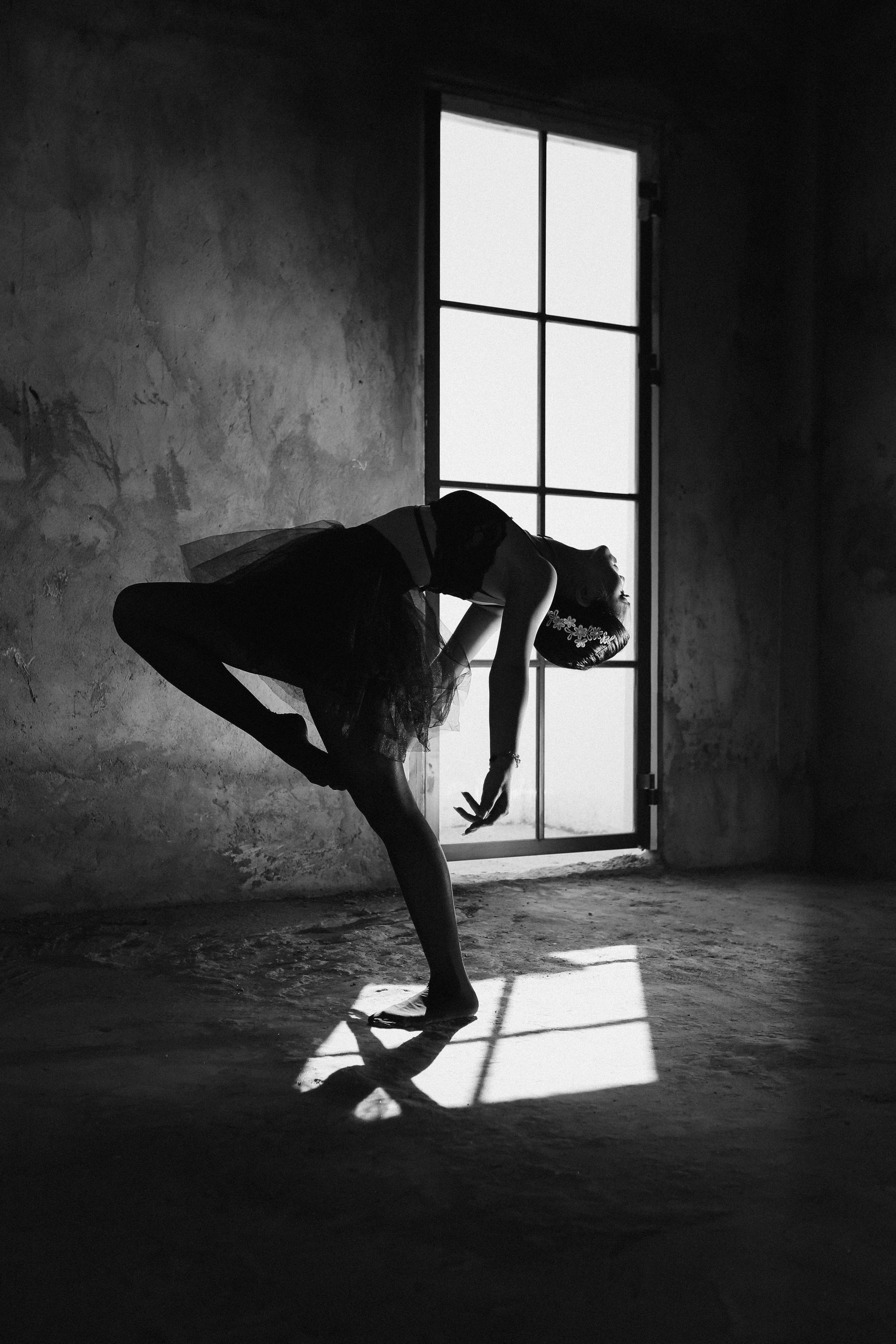
ON POLITICS AND MORALITY

Peter M. Rojcewicz, PhD

Bainbridge Island, WA

Current social unrest across the nation raises some philosophical and pragmatic questions fundamental to culture, politics, morality, and human relations. Two such pertinent issues raised are whether politics transcends morality or whether morality transcends the laws of the state?

If morality transcends politics and the laws of the state doesn’t that mean that our laws are weak and that anyone can break them, if one’s conscience so instructs? One might think here of the figures of Socrates, Antigone, Thoreau, and other morally propelled individuals of Western culture. If morality transcends politics does this lead to a loose society wherein people do not respect law or authority?

However, if politics transcends morality, does that mean that politics is a unique condition of life, a model of how to live with and among others? If politics transcends morality because people will not live by and be constrained by moral principles, does that mean morality is mere expediency of self-advantage and non-existent as a transcendent guide of behavior? If morality does not effectively apply to politics, then to what does it apply and why? What might effectively serve both the pragmatic order of the body politic and abstract individual values? What lived experience and quality might help forge a mind disciplined to be simultaneously more abstract and more concrete?  

Alfred North Whitehead asserted that a “sense of style,” what he saw as the last acquisition of an educated mind and pervades one’s entire being, was essential. Style is intimate with knowledge and power. In “The Aims of Education,” Whitehead pointed out, “Style is the fashioning of power, the restraining of power.” Style, across all human sectors – science, literature, art, social engagement – is about accomplishment and constraint. In the arts, for example, a performer gives oneself to the generic constraints of a metier, while simultaneously satisfying one’s personal goals and aspirations.  As Whitehead knew, “With style your power is increased, for your mind is not distracted with irrelevancies, and you are more likely to attain your object.” The style of everyday life among others and the earth in community calls for citizens to live aesthetically as unique works of relational art.

EDUCATION ADRIFT

View Peter M. Rojcewicz, PhD’s  graphic link

PETER M. ROJCEWICZ, PHD

Bainbridge Island, WA

Peter M. Rojcewicz, PhDPeter M. Rojcewicz, PhD • YouYouLeadership Consultant; Education Management Advisor; Arts Education Specialist; Applied Humanities Mentor; Noetic Learning Theorist; Folklore Belief Materials Scholar; Award-winning Poet

Nietzsche, in “On the Future of Our Educational Institutions,” makes distinction between “institutions for teaching culture and institutions for teaching how to succeed in life.” Once dedicated to broadly developing the personal and social self, education today enhances the appetite for material consumption, and in this context, almost everything is measured by a cost-benefit analysis and leads to cultural and epistemological conformity, the commodification of consciousness, and the flop house of alienation. The arts and humanities are denigrated by some as ‘anti-disciplines’ whose only value is to stimulate the established sciences (E.O. Wilson, On Human Nature). Despite having a philosophy degree and a Ph.D. in neoclassical social theory from a quality German university, Alex Karp, CEO of Palantir Technologies, sees no present value in a classic liberal arts education in a techno-scientific era. Recently, at the Davos economic conference in Switzerland, he confidently declared, and without a sense of misfortune, that AI “will destroy humanities jobs.” Folk and indigenous wisdom traditions, even less regarded than the humanities, are frequently considered feckless to enhance life success and so do not count as significant.

In our techno-financial society, “the educational ideal is the intelligent and skilled technician, not the intellectual and scholarly academic or layperson of yesteryears.” (Rahman, “Betrayal of Intellect”). Commercialism impersonates intelligence. Profitability, efficiency, and career preparation overcome knowledge and truth. Students are valued as ‘consumers’ and faculty as ‘employees’, rather than engaged members of shared learning communities. The neoliberal market model promotes the flawed notion that the consumer alone speaks in the name of education. Within that model, the power of earning belittles the pursuit of learning. Long term capital gain is the premier goal.

When people are treated as instrumental means to others’ ends, they are dehumanized, removed from their caring, devoid of spontaneity, and crippled as to what is integral to themselves and others. Treating nature as an exploitable ‘standing reserve’ (Heidegger) of raw materials and people as essentially transactional tokens gives impetus to kleptocratic leadership. In this context, education undergoes a degeneration of institutional Being and underserves culture. In addition to skilled technicians and titans of capital gain, a salutogenic culture requires artist-intellectuals. Nietzsche stated, “This is the basic idea of culture insofar as it assigns only one task to every single one of us: to promote inside and outside of ourselves the generation of the philosopher, the artist, and the saint, and thus to work at the perfection of nature.” He understood that by increasingly adapting itself to the techno-economic needs of the age, education abdicates its authority to guide the age.

ON FREEDOM

Peter M. Rojcewicz, PhD

Bainbridge Island, WA


I find the thoughts of poet David Whyte on ‘freedom’ as necessarily compensatory to today’s widespread association with radical personal autonomy:

“Today, ‘freedom’ tends to mean lack of constraint and therefore, lack of relationship. One is held to be most free when ‘nobody can tell me what to do’ – and ‘I can do what I want.’ This implies a person is most free when least connected with others and the larger community of beings within which humanity finds our place.”

Holding such a view of freedom fragments the most creative, and unique aspects of one’s intrinsic being. It causes an ontological splintering of one’s personal ‘genius’. The word ‘genius’ is from the Latin and refers to the spirit of a place that renders it unutterably itself. One’s inherent ‘genius’ is the embodiment of one’s unique spirit in creative engagement with the world. Whyte’s position implies that people are truly free only when connected with others and the community of human and more-than-human world. Freedom is consubstantial with relational care and understanding of others.

Noetic Insight and Challenges to Language

Peter M. Rojcewicz, PhD

Lucca, Italy


Unless you are at home in the metaphor…unless you have had your proper education in the metaphor, you are not safe anywhere. Because you are not at ease with figurative values: you don’t know the metaphor in its strength and its weakness. – Robert Frost

It is difficult to get the news from poems / yet men die miserably every day for lack / of what is found there. – William Carlos Williams

We know more than we can say. – Michael Polanyi

We should be aware that the supposed clash between rigorous science language and everyday metaphoric description may be less real than we may be led to believe by the priests of a particular craft or discipline. All things are forever open to interpretation and shifting meaning. – Marcus G. Raskin

______________________________________________________________________

If learners are to possess noetic literacy of rational and transrational cognitive slills, schools must offer pathways to direct, unmediated learning experiences that integrate polarized subject and object perspectives (Kirk J. Schneider, “The Polarized Mind,” 2013). Noetic, from the Greek, is used here to refer to forms of implicit knowing through direct experience. Noetic consciousness is rich in archetypal images carried into awareness by hunches, intuitions, visions, epiphanies, revelations, performances, and dreams. Whether we are engaging art or simply involved in our every life, learning and coming to know via noetic modalities ‘feels’ more like an unknowing and unlearning. Noetic awareness comes as if by ‘letting go’ of conventional structures and accepted definitions of orthodox knowledge, and a ‘letting come’ of emergent, implicit knowledge. Noetic knowledge is an apprehension of deep meaning of things that, while fraught with mystery and profundity, is indisputably true for the experiencer.

Because noetic literacy involves informal and states of non-dual consciousness that are ostensibly ineffable, educators encounter significant challenges to both their teaching and scholarship when using a “linear, argumentative, and critical style” (K.E. Lorena, Subjective & Aesthetic Interface, An Inquiry into Transformed Subjectivities,” Academia.edu, 2013). The challenge for scholars comes from the need to disclose the fluid, both/and nature of noetic consciousness when using academic prose and its exclusionary binary either/or logic. Noetic consciousness constitutes what Ken Wilber (“Sex, Ecology, and Spirituality” 1995) refers to as “vision logic,” a form of cognition that “can hold in mind contradictions, it can unify opposites, it is dialectical and non-linear, and it weaves together what otherwise appears to be incompatible notions.” Noetic understanding does not result from a ready-made science but from events that are ‘strange’ or anomalous, defying description by conventional discourse.

A poetic language linking logos to eros and concept to image and capable of addressing the omnijective (i.e., hybrid objective and subjective) qualities of noetic understanding must ultimately be employed by artist-intellectuals when writing about cognitive diversity, epistemological pluralism, and ineffable phenomena of the psyche. Poetry is the true voice of thought and the ‘topology of being’ that directs us toward the whereabouts of Being (Heidegger, “The Poet As Thinker”). Poetry is “the language thinking uses to say what it thinks.” That is simply to say, authentic thinking is poetic. Poetic speech – whether in poetry or prose – is the vehicle for conveying a transrational and translinguistic meaning, rather than the any particular meaning itself. Poet and teacher Archibold MacLeish stated the matter precisely, “A poem mustn’t mean but be.” 

How might noetic learners embrace their perspicacious insights and artistic creations? Many schools, including fine arts academies and performing arts conservatories, engage education exclusively with the academic language of art criticism in hopes of understanding art. The unfortunate consequence is that authentic tacit experience of artistic discovery is missing from the learner’s experience and is instead subjected to critical judgement and evaluation, precisely in the form of an observer’s discursive language. Schools encourage learners to master the métier, familiarize themselves with the cannon of great works, and develop a flawless virtuosity. It is the case, however, that learners are rarely expected to experiment, unlearn and surrender to what emerges in the learning matrix that leads to an ineffable wonder that is neither mediated by academic language nor justified by external verification. For schools to turn toward embracing noetic literacy, educators must alter the trajectory of education and expose its epistemic deformations rendered upon learners by failure to recognize noetic learning and knowledge as authentic. Breakthrough moments of noetic awareness provide learners freedom – freedom from failure phobia, freedom from a need to succeed, and cognitive freedom from exclusionary ideas about learning that conceal rather than discloses one’s essential identity.

It must be understood that I do not present within my human completion project noetic principles as definitive rules or formulae. This is not possible, as the mythopoetic nature of noesis defies separation through language-use into discrete constituent elements (i.e., ontic knowledge) and cannot be fully disclosed as self-evident by logical exposition (i.e., apodictic). Paradoxically, this essay, at least in very small part, is an ontic and discursive language-construct yearning to explore noetic, supra-rational knowing and the nature of consciousness transformation beyond self-actualization. Academic language is significantly different from and less accurate when describing the phenomenology of noetic consciousness. Here lies the issue of translatability. What do I mean by this?

Scholarly works are generated, contested, and disseminated within discursive disciplines and their technologically tacit knowledge. The academy’s language of knowing originates and is negotiated within dominant academic models, which today means science, technology, engineering, and mathematics (STEM). The expected language of academic knowing is considered “disinterested, objective, and value free” and characteristic of number-based sciences. The position of ‘semantic positivism’ (Philip Wheelright, “Metaphor and Reality,” 1968) has it that all viable research inquiries must proceed in a scientific manner, using logico-scientific language. On the other hand, the natural ‘language’ of noesis is ‘poetry’, and it addresses an omnijective (i.e., hybridity of objectivity and subjectivity) reality that embraces supra-rational, numinous, spiritual, and ethical elements.

The challenge to classroom teachers lies with how they are to guide learners to intimately embrace deeply personal and implicit intuitions that are not easily described or shared. When engaging art, we intuit that the tacit insights are conveyed through the objects created in the process of aesthetic response to the world. As such, art is akin to an ontological ‘icon’ (Margaret H. Freeman, “The Poem as Icon”) or “affecting presence’ (R.P. Armstrong, “The Affecting Presence” and “The Powers of Presence”) imbued with the living consciousness of its makers and history of performers that invokes within participants an uncanny perspicacious certainty. That is why art is highly valued and often feared. In either case, the world recognizes art’s essential role as the link between noetic cognition and intrinsic identity of the learner.

Children at play or art making demonstrate noetic knowledge naturally in the forms of an ‘analogical correspondence” where bodily movement, song, brush stroke, laughter, or swinging form an indivisible ecology of learning that “unites the child’s forms of understanding with forms of expression, and in so doing have an integrative effect on the child’s personality as a whole” (Bjorkvold, “The Muse Within,” p.27). Poetic association and analogy are soon replaced by a prevailing language regarded as the definitive medium of conscious expression. We look to the words of renowned thinkers in ways that can be contested and defended; however, there is no such assurance of artistic appreciation. We appreciate art based on a combination of linguistic sanction (e.g., disciplines of history and religion). More importantly, we appreciate art due to direct aesthetic experience that discloses something of our intrinsic Being, an outcome not possible by non-poetic language.

This essay considers whether logical discourse and procedures related to natural science prevalent in the Academy constitute the one and only valid language capable of effectively describing meaning-making structures and events of the human lifeworld. Are there not credible languages suited to immaterial spirit or the psychoid unconscious (C.G. Jung, The Red Book)? When addressing non-discursive, intuitive understandings, scholars have professional access to and training with only professional discursive language. What might be lost, missed, or otherwise modified when we exclusively utilize logico-scientific language for lived experience and phenomena ostensibly mythopoetic in nature? It is often the case that in the process of lectures, group activities, improvisations, or hands-on art exploration, learners have a direct intersensory apprehension of say, sound, or coldness, or color, or motion forming what G.E. More refers to as ‘dispositional knowledge.’ This noetic comprehension is stored in memory as an image. What is important here is knowing how that image is structured. If a noetic learner bears witness to their implicit insight in a classroom given to using conventional language based on a subject-object duality, it must necessarily prove feckless to disclose noetic realities. Consequently, the learner undergoes an ‘epistemic harm’ (Miranda Fricker). The image is thus shaped by crosscurrents of academic and mytho-poetic languages, as well as the assumptions, values, and rules embedded within their related inquiries. The dominant discourse of a classroom ultimately shapes the comprehension of the learner’s sensation and image of their noetic intuition. Whereas the learner’s noetic moment carries feelings of cognitive authority and truth, the official classroom rhetoric negates its credibility by reducing it to failure and unjustly marginalizes the learner.  

In summary, the language of noesis speaks of and to the direct perspicacious learning, as well as to the emotional effect of dreams, visions, revelations, intuitions, and altered states of consciousness. Noetic mythopoetic language is a strange wisdom of nothing less than everything – specters of high strangeness, deep obfuscation, argot of soul. In my conceptual framework on noetic learning experiences, the linking of ontic with poetic languages and concepts with images are intended to cooperate in mutual service of overcoming subject-object divisions. The language of academic apodictic knowing can touch the soul of mind; but it is the poetry of noesis that touches the soul of soul. It is certainly the case that my present explorations of noesis only begins to address the issue of scholarship that synthesizes mythopoetic language (see my “Even God,” Academia.edu, 2025) and academic parlance, something akin to Schoenberg’s sprechstimme, a voice between logos and poesis, image and concept, speech and song.concept, speech and song.