Peter M. Rojcewicz, PhD
Lucca, Italy
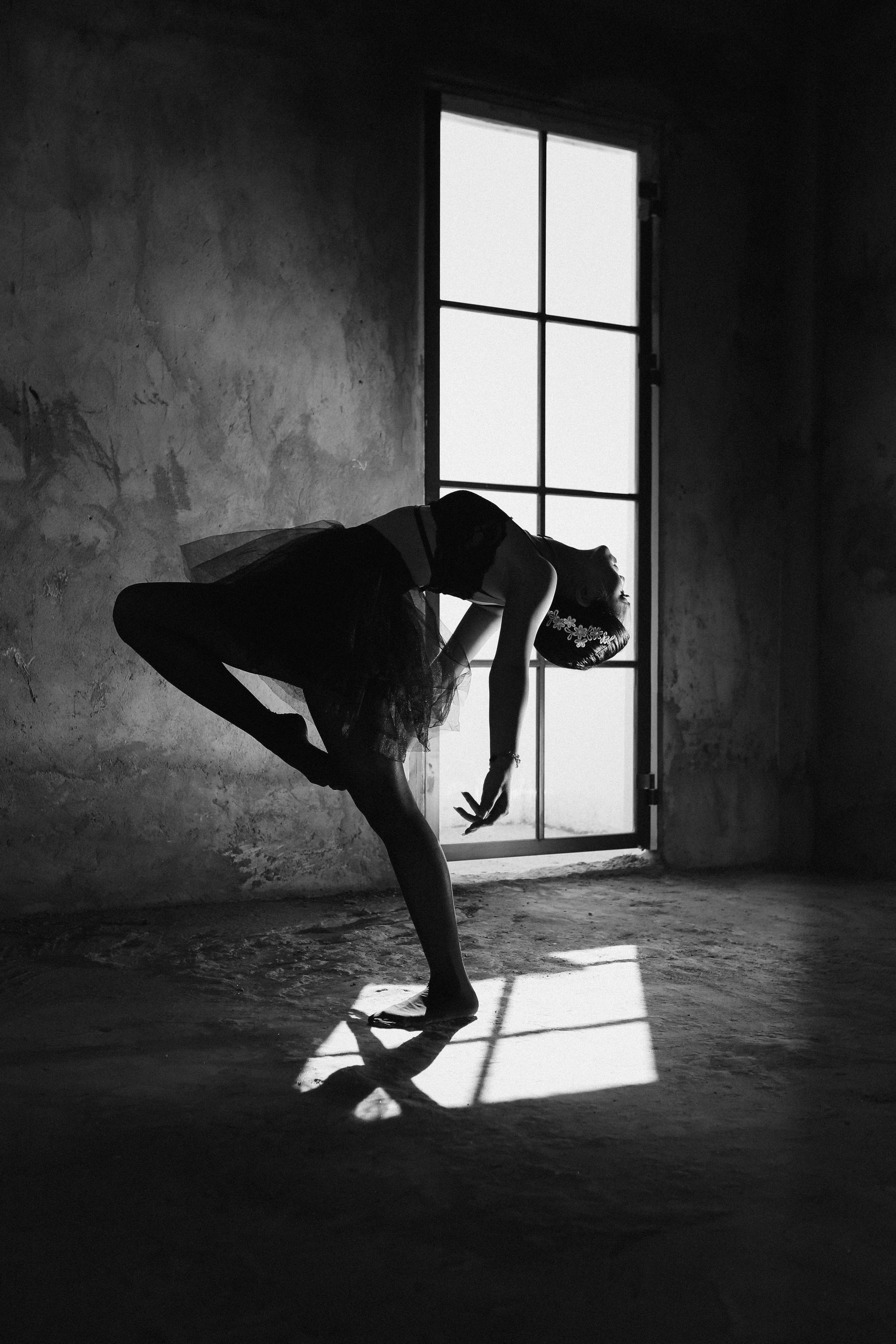
Noetic learning gained through the arts is direct, non-propositional, and non-explicit understanding that precedes explanation. Learning and knowing that are noetic are important elements of our immediately lived experience, prior to all analytical thoughts about it. The noetic voice of thought is intimate with poetry and art. In the late Renaissance, Giambattista Vico proclaimed “verum et factum convertuntur,” meaning “the true and the made are convertible” (Berlin, “Vico & Herder”). Reacting against the rationalism of Descartes, Vico believed truth is not a matter of discrete, ontic ideas but derives from our manifold acts of creation. From that generative perspective, human truth includes history, philosophy, literature, poetry, as well anything else people fabricate or fashion. Artists, and other makers of things, can comprehend their creative products in direct noetic ways denied to mere observers at a distance who are not immersed in the creation. The knowledge of an observer of the external world differs in principle from the insider’s non-discursive knowledge of the artifacts we create, and which ostensibly follow principles we ourselves impose. The arts and humanities position us well to bring deep focal “attention to the epistemic resources involved in implicit understanding and knowing” (Alexis Shotwell, Routledge, 2017:79). Let us briefly consider the knowing demonstrated by artists.
Music composers know deeply the reality of sound structures, musical patterns, aural processes, and a broad range of rational relationships within their aesthetic choices and critical somatic decisions. What musicians, and artists in general, create as their art can be known in the “superior ‘inside’ fashion,” for which “knowledge of the external world cannot possibly be the paradigm” (Berlin, “Vico & Herder”). Musicians-singers, dancers, and actors creatively employ the body to think critically and make decisions in the medium of sound, and not simply about sound in order to intimately experience aesthetic values and passions.
In this poetic process of knowing, the arts can be seen as continuous with conventional knowledge, including the sciences. Creative people in all fields demonstrate a broad-based literacy beyond written language and numbers, joining discursive and non-discursive knowing, as well as abstract and embodied learning. The images of each artistic ‘language’ mysteriously prepare the mind for significant conceptual and perceptual cognitive acts. The psyche’s generated images constitutes the body-mind’s fundamental means of knowing; no cognitive operation is more important to consciousness (Hannaford, “Smart Moves”) than image making. Unique forms of learning emerge when lived experiences provide, confirm or modify images of self and planet. Not simply metaphors for thoughts, images of the psyche are essential to how people acquire, structure, retrieve, and apply information. Margaret H. Freeman (“The Poem as Icon”) understands “cognition as the sensory-motor-emotive-conceptual processes of ‘minding’ and the aesthetic faculty as the processes of attention, imagination, memory, discrimination, expertise, and judgment that underlie all human cognition, including the arts and sciences.”
The best scientists, like artists, value imagery in their most significant work. Jerome Friedman knew scientific “Reasoning is constructed with movable images, just as poetry is.” A vision of molecules forming the archetypal image of the uroboros snake led to Frederick von Kekule’s discovery of the six–carbon benzene ring. Significant insights and innovation often result from the generative synthesis of poetic images and reason. Whether we look to art or science, it is clear that new learning and knowledge rest upon interrelationships between distinct clusters of multi-sensory images in the body-mind. The best artists and scientists integrate intuition and unconscious processes with mental skills, including accurate observation, spatial and kinesthetic thought, identification of key parts of a complex whole, and recognition or invention of patterns governing systems (Root-Bernstein). In the present indeterminate world where predictability seems impossible, noetic literacy helps reveal subtle states of order challenging chaos and reducing cultural entropy. When schools integrate curricula with STEM-based elements with the arts and humanities through complex, creative work, people achieve an “existential intimacy of learning” with their all-sided humanity (Rojcewicz, “Existential Intimacy of Learning”).
To understand the meaning of a mathematical theory, a symphony, a sculpture, or a poem ultimately requires ‘dwelling in them’ (Polanyi, “Tacit Dimension”). That is to say, an astronomer, music composer, sculptor, or mathematician necessarily ‘dwells’ in experiences of science, music, or mathematics to obtain unmediated insider knowledge that is its ‘truth’. Immersed in their respective domains, each overcomes a sense of an autonomous self and ‘surrenders’ to art works in order ‘to live in them’ (Polanyi, “Personal Knowledge”).
With the exception of the field of embodied cognition, rarely is the question asked, “Is our body learning?” Albert Einstein lived that question. By imagining he could travel with a beam of light at 186,000 miles per second, Einstein acknowledged the key role bodily-kinesthetic and visual images played in his Gedanken thought experiment. Once asked to identify the nature of his consciousness during moments of noetic insight, Einstein did not describe his awareness as either algebraic or geometric. He pointed out that his moments of radical creativity possessed a noetic element of “the muscular type” (Brian Swimme, “The Hidden Heart of the Cosmos”). When contemplating the inscrutable Milky Way, Einstein did not envision it separate from his body-mind instrument, but experienced it directly, as if in intimate communion with the “Old One,” as he poetically referred to the galaxy. He described his noetic insight into the structure of space-time as not only transforming him mentally, but also physically and poetically.
The primary goal of muscular, hands-on participation in the arts, as in the sciences, is achievement of a profound ontological shift (i.e., metanoia) of a participant’s fragmented perception away from one sided thinking, judging, acting, or merely acquiring an artistic métier and toward an embodied cognition of self. “The symbols of the self,” wrote C.G. Jung (“Special Phenomenology of the Child Archetype”), arise in the depth of the body, and they express its materiality every bit as much as the structure of the perceiving consciousness.” Immersed in the arts our autonomous self-agency is suspended and the ‘subjectivity’ inscribed in the arts comes forward as a generative ‘Other’ we engage with our body-mind and by which consciousness is transformed.
The intelligent body is the quintessential instrument of all intellectual and practical knowledge (Polanyi, “Tacit Dimension” 1967:15). Dancers, as well as actors, musicians, and crafts people, utilize somatic ‘body in the mind’ intelligence (Lakoff and Johnson, “Philosophy in the Flesh”) to realize creative goals and personal aspirations. From that perspective it is fair to say we learn and know in and through the entire body and not merely the brain. It is through our awareness of the body’s contact with things that we are able to attend to the world. Yuasa Yasuo stated, (“The Body: Toward an Eastern Mind-Body Theory”) that “true knowledge cannot be obtained simply by means of theoretical thinking, but only through ‘bodily recognition or realization’ […] that is, through the utilization of one’s total mind and body (quoted in Erin McCarthy, “The Knowing Body” ).
Because it involves unconscious processes, non-discursive knowledge defies precise description in words (Langer, “Problems of Art” 1976: 163-180). Moreover, physically observing dance involves more than visually viewing the beauty of form and design. It demands we intuitively grasp the multivalent potentiality of bodies in motion. Dance activates in us primal understanding of trans-rational kinesthetic knowing. Dance releases deep muscle memory of performers and audience that activates the body’s internal sense of patterned response. It is also true that painters ‘think’ critically in and through color and paint and not numbers or words. Abstract artist and master arts educator Mike Grady addresses the subtle somatic nature of his creative process in this way,
“As an artist my insights are visible, material, and tangible rather than linguistic. They are made to be experienced directly [by the body] rather than simply discussed. I use canvas and paper with acrylic to create abstract color-fields which contain calligraphic ‘events’ rather than language or explicit images” (Grady, “Commentary to Lionel Yang in Lionel Yang, “Tao Consciousness”).
The body understands what intellect cannot. When we listen to music or engage dance or art in general, a new kind of worldly interaction and a new subjectivity (i.e., Being/ontology) come forward. According to Elizabeth Grosz (“Volatile Bodies”), our psycho-emotional ‘subjectivity’ is not strictly an ‘inner’ reality but rather emerges from ongoing engagements of the unique conditions of the physical body with the environment, forming an inter-sensory intimacy of subjective and objective interactions with the world. The African Bantu word sikia refers to somatic/auditory knowledge. Among the Bantu, visual, musical, and kinesthetic perception equals visual, musical, and kinesthetic thinking. There is no specific Bantu word for “listening or hearing” – because it wouldn’t capture the integrated knowing that occurs. Sikia means that one sees, listens, moves, understands, and dances to music as a unified experience. For the Bantu, there can be neither meaning nor reality divorced from indivisible sensory participation in a group.
In any performing arts ensemble, as in nature, a tendency exists toward entrainment (Nachmanovitch, “Free Play”), that is, the synchronization of two or more rhythmic systems into what is virtually a single pulse. This alignment is a prime example of ‘analogical correspondence’ (Bjorkvold, “The Muse Within”). For example, in art making – as in children’s play ‐ music, thoughts, words, songs, feelings, and the entire spectrum of bodily‐kinesthetic movements integrate analogically with the entire neural network as different learning modalities of the artists’ total experience; forms of creative expression unite with forms of learning. In such moments of intuitive insight, there emerges a recursive ‘biocultural’ (Edith Cobb, “The Ecology of Play”) interface of body-mind-world. Mind extends beyond the body into the social environment, just as ideas extend the mind into the somatic environment.
This biocultural link is a form of natural care, reciprocity, and mutual ecological respect between human and humus. David Abrams comments on that reciprocity, “Genuine art does not stifle the nonhuman element but, rather, allows whatever is Other in the materials to continue to live and to breathe.” He continues, “In return, these materials contribute their more-than-human resonances to human culture” (Abrams, “The Spell of the Sensuous”). The synchronization of the body-mind’s focus with its artistic function creates moments of indivisible unity of self, setting, and performance. Somatic and musical synchronization is noted by international teaching-artist specialist and author Eric Booth regarding the El Sistema Venezuela orchestra instructors who, rather than establishing norms for bodily movement during performances, merely allow that movement to emerge from the priority of emotional connection to the music. The result is the formation of El Sistema orchestras that “move more like fish in the flow of the music.” 12 Following the work of Csikszentmihalyi (“Flow”), neuroscientist Julia F. Christensen defines ‘flow’ as “a fleeting, immersive state in which time and space seem to compress or expand, accompanied by a delicious fusion of movement and awareness – where you don’t just move: you are the movement” (“Ingredients for Brilliance,” Aeon 9 June, 2025).
Entrainment, analogical correspondence, reciprocity, and flow mark a tacit learning and knowledge-construction through immersive participation. Such interactions of indivisible mutuality involve one’s entire Being. El Sistema’s orchestral children play, learn, and think in “ecological totalities” (Cobb, “The Ecology of Play”). Observers have noted how audiences move physically and emotionally to cadences of musicians, poets, and preachers. Dancers, musicians/singers, and actors read subtle kinesthetic and proxemic cues and move increasingly in synch with the living pulse of the ensemble. Improvising musicians depend upon this natural resource to integrate their music, as they breathe, pulse, think, and act together. When singing in harmony, choral voices do not create an absolute uniformity of sound; they move in and out of each other’s frequency, always maintaining their vocal integrity (Nachmanovitch, “Free Play”).
The final example here of non-discursive corporeal intelligence to be discussed comes from China. The words ti-hui indicate that when involved in knowing and knowledge attainment, one has to use the body first, say, for example, with physical gesture or mime, and then, and only then, can the mental function of reflective thinking begin. Somatic researcher Richard Shusterman offers the concept of somaesthetics that “highlights and explores the soma – the living, sentient, purposive body – as the indispensable medium for all perception.” (see Shusterman’s quote in Jessica Hemmings, “Can That Be Taught? Lessons in Embodied Knowledge from Memoir Writing for Craft & Design Education” – published in Somaesthetics and Design Culture, edited by Balint Veres and Richard Shusterman (Brill: 2023). This authority of the body leads to what researchers in the field of embodied cognition describe as whole-body thought and whole-body thinking. The body is a fundamental “subject of awareness” (Abrams, “Spell of the Sensuous,” 59), an organic basis of thought and intelligence, possessing a sensual imagination (Abrams, “Spell” 47).
In summary, noetic cognition manifested through the arts is direct, intimate, and synthetic knowing through body-mind image making. As images constitute the “first matter” (i.e., prima materia) of consciousness, poetry is the original language of genuine thinking and the speech by which thought reveals itself to us (Heidegger, “The Thinker As Poet”). It has been argued here that noetic understanding is enhanced by immersion in or hands-on, inter-sensory engagement with the arts, that includes muscular reasoning among its diverse cognitive modalities. Joining the entrainment of the head and heart through art and art making restructures our humanity and overcomes the crude logic of body-mind dualism. During this time of human and planetary fragmentation, division, Othering, and self-commodification, art reconciles subject-object splits and discloses the sense, need, impulse, and thought of Being as an active presence in the world.