Noetic learning gained through the arts is direct, non-propositional, and non-explicit understanding that precedes explanation. Learning and knowing that are noetic are important elements of our immediately lived experience, prior to all analytical thoughts about it. The noetic voice of thought is intimate with poetry and art. In the late Renaissance, Giambattista Vico proclaimed “verum et factum convertuntur,” meaning “the true and the made are convertible” (Berlin, “Vico & Herder”). Reacting against the rationalism of Descartes, Vico believed truth is not a matter of discrete, ontic ideas but derives from our manifold acts of creation. From that generative perspective, human truth includes history, philosophy, literature, poetry, as well anything else people fabricate or fashion. Artists, and other makers of things, can comprehend their creative products in direct noetic ways denied to mere observers at a distance who are not immersed in the creation. The knowledge of an observer of the external world differs in principle from the insider’s non-discursive knowledge of the artifacts we create, and which ostensibly follow principles we ourselves impose. The arts and humanities position us well to bring deep focal “attention to the epistemic resources involved in implicit understanding and knowing” (Alexis Shotwell, Routledge, 2017:79). Let us briefly consider the knowing demonstrated by artists.
Music composers know deeply the reality of sound structures, musical patterns, aural processes, and a broad range of rational relationships within their aesthetic choices and critical somatic decisions. What musicians, and artists in general, create as their art can be known in the “superior ‘inside’ fashion,” for which “knowledge of the external world cannot possibly be the paradigm” (Berlin, “Vico & Herder”). Musicians-singers, dancers, and actors creatively employ the body to think critically and make decisions in the medium of sound, and not simply about sound in order to intimately experience aesthetic values and passions.
In this poetic process of knowing, the arts can be seen as continuous with conventional knowledge, including the sciences. Creative people in all fields demonstrate a broad-based literacy beyond written language and numbers, joining discursive and non-discursive knowing, as well as abstract and embodied learning. The images of each artistic ‘language’ mysteriously prepare the mind for significant conceptual and perceptual cognitive acts. The psyche’s generated images constitutes the body-mind’s fundamental means of knowing; no cognitive operation is more important to consciousness (Hannaford, “Smart Moves”) than image making. Unique forms of learning emerge when lived experiences provide, confirm or modify images of self and planet. Not simply metaphors for thoughts, images of the psyche are essential to how people acquire, structure, retrieve, and apply information. Margaret H. Freeman (“The Poem as Icon”) understands “cognition as the sensory-motor-emotive-conceptual processes of ‘minding’ and the aesthetic faculty as the processes of attention, imagination, memory, discrimination, expertise, and judgment that underlie all human cognition, including the arts and sciences.”
The best scientists, like artists, value imagery in their most significant work. Jerome Friedman knew scientific “Reasoning is constructed with movable images, just as poetry is.” A vision of molecules forming the archetypal image of the uroboros snake led to Frederick von Kekule’s discovery of the six–carbon benzene ring. Significant insights and innovation often result from the generative synthesis of poetic images and reason. Whether we look to art or science, it is clear that new learning and knowledge rest upon interrelationships between distinct clusters of multi-sensory images in the body-mind. The best artists and scientists integrate intuition and unconscious processes with mental skills, including accurate observation, spatial and kinesthetic thought, identification of key parts of a complex whole, and recognition or invention of patterns governing systems (Root-Bernstein). In the present indeterminate world where predictability seems impossible, noetic literacy helps reveal subtle states of order challenging chaos and reducing cultural entropy. When schools integrate curricula with STEM-based elements with the arts and humanities through complex, creative work, people achieve an “existential intimacy of learning” with their all-sided humanity (Rojcewicz, “Existential Intimacy of Learning”).
To understand the meaning of a mathematical theory, a symphony, a sculpture, or a poem ultimately requires ‘dwelling in them’ (Polanyi, “Tacit Dimension”). That is to say, an astronomer, music composer, sculptor, or mathematician necessarily ‘dwells’ in experiences of science, music, or mathematics to obtain unmediated insider knowledge that is its ‘truth’. Immersed in their respective domains, each overcomes a sense of an autonomous self and ‘surrenders’ to art works in order ‘to live in them’ (Polanyi, “Personal Knowledge”).
With the exception of the field of embodied cognition, rarely is the question asked, “Is our body learning?” Albert Einstein lived that question. By imagining he could travel with a beam of light at 186,000 miles per second, Einstein acknowledged the key role bodily-kinesthetic and visual images played in his Gedanken thought experiment. Once asked to identify the nature of his consciousness during moments of noetic insight, Einstein did not describe his awareness as either algebraic or geometric. He pointed out that his moments of radical creativity possessed a noetic element of “the muscular type” (Brian Swimme, “The Hidden Heart of the Cosmos”). When contemplating the inscrutable Milky Way, Einstein did not envision it separate from his body-mind instrument, but experienced it directly, as if in intimate communion with the “Old One,” as he poetically referred to the galaxy. He described his noetic insight into the structure of space-time as not only transforming him mentally, but also physically and poetically.
The primary goal of muscular, hands-on participation in the arts, as in the sciences, is achievement of a profound ontological shift (i.e., metanoia) of a participant’s fragmented perception away from one sided thinking, judging, acting, or merely acquiring an artistic métier and toward an embodied cognition of self. “The symbols of the self,” wrote C.G. Jung (“Special Phenomenology of the Child Archetype”), arise in the depth of the body, and they express its materiality every bit as much as the structure of the perceiving consciousness.” Immersed in the arts our autonomous self-agency is suspended and the ‘subjectivity’ inscribed in the arts comes forward as a generative ‘Other’ we engage with our body-mind and by which consciousness is transformed.
The intelligent body is the quintessential instrument of all intellectual and practical knowledge (Polanyi, “Tacit Dimension” 1967:15). Dancers, as well as actors, musicians, and crafts people, utilize somatic ‘body in the mind’ intelligence (Lakoff and Johnson, “Philosophy in the Flesh”) to realize creative goals and personal aspirations. From that perspective it is fair to say we learn and know in and through the entire body and not merely the brain. It is through our awareness of the body’s contact with things that we are able to attend to the world. Yuasa Yasuo stated, (“The Body: Toward an Eastern Mind-Body Theory”) that “true knowledge cannot be obtained simply by means of theoretical thinking, but only through ‘bodily recognition or realization’ […] that is, through the utilization of one’s total mind and body (quoted in Erin McCarthy, “The Knowing Body” ).
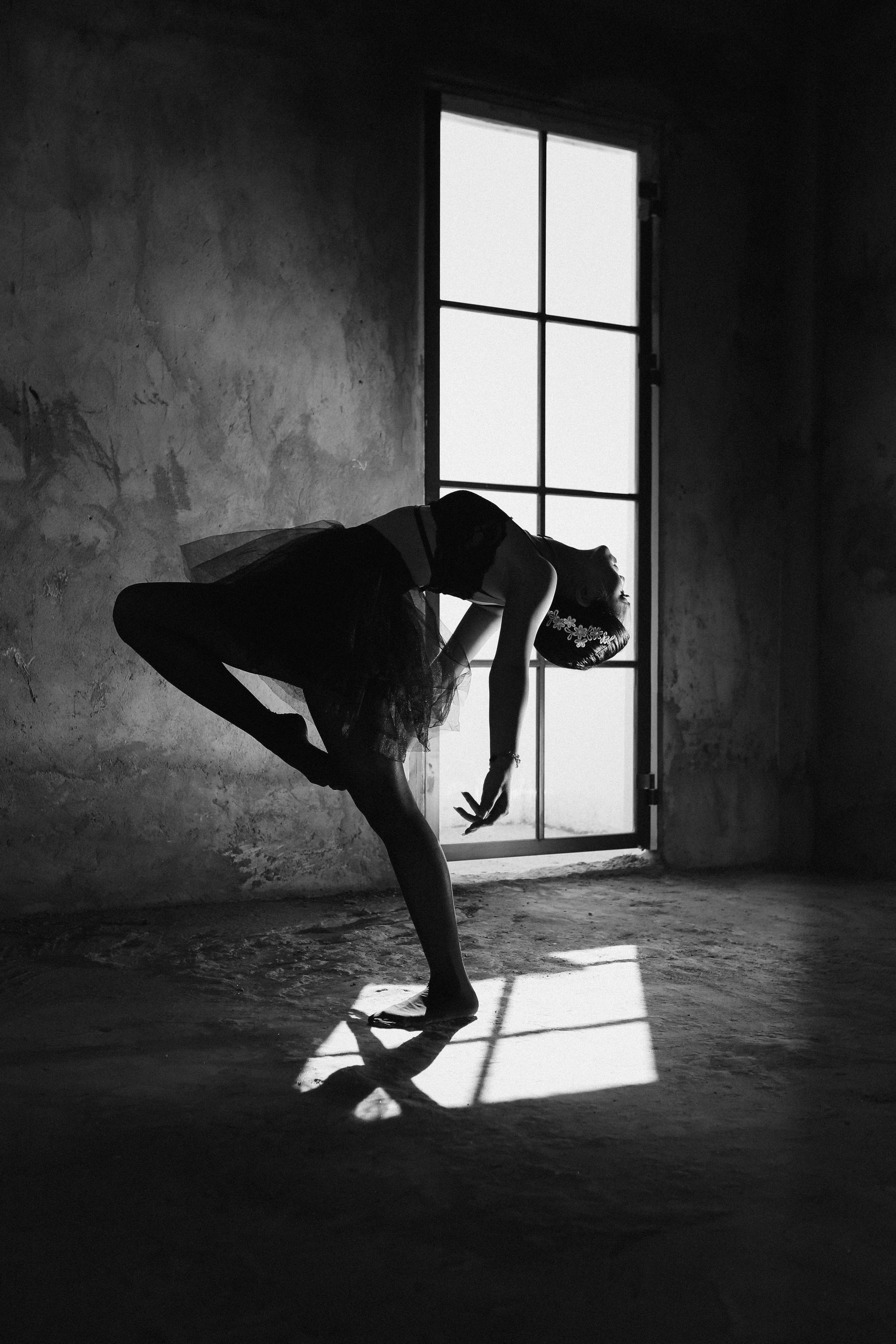
Because it involves unconscious processes, non-discursive knowledge defies precise description in words (Langer, “Problems of Art” 1976: 163-180). Moreover, physically observing dance involves more than visually viewing the beauty of form and design. It demands we intuitively grasp the multivalent potentiality of bodies in motion. Dance activates in us primal understanding of trans-rational kinesthetic knowing. Dance releases deep muscle memory of performers and audience that activates the body’s internal sense of patterned response. It is also true that painters ‘think’ critically in and through color and paint and not numbers or words. Abstract artist and master arts educator Mike Grady addresses the subtle somatic nature of his creative process in this way,
“As an artist my insights are visible, material, and tangible rather than linguistic. They are made to be experienced directly [by the body] rather than simply discussed. I use canvas and paper with acrylic to create abstract color-fields which contain calligraphic ‘events’ rather than language or explicit images” (Grady, “Commentary to Lionel Yang in Lionel Yang, “Tao Consciousness”).
The body understands what intellect cannot. When we listen to music or engage dance or art in general, a new kind of worldly interaction and a new subjectivity (i.e., Being/ontology) come forward. According to Elizabeth Grosz (“Volatile Bodies”), our psycho-emotional ‘subjectivity’ is not strictly an ‘inner’ reality but rather emerges from ongoing engagements of the unique conditions of the physical body with the environment, forming an inter-sensory intimacy of subjective and objective interactions with the world. The African Bantu word sikia refers to somatic/auditory knowledge. Among the Bantu, visual, musical, and kinesthetic perception equals visual, musical, and kinesthetic thinking. There is no specific Bantu word for “listening or hearing” – because it wouldn’t capture the integrated knowing that occurs. Sikia means that one sees, listens, moves, understands, and dances to music as a unified experience. For the Bantu, there can be neither meaning nor reality divorced from indivisible sensory participation in a group.
In any performing arts ensemble, as in nature, a tendency exists toward entrainment (Nachmanovitch, “Free Play”), that is, the synchronization of two or more rhythmic systems into what is virtually a single pulse. This alignment is a prime example of ‘analogical correspondence’ (Bjorkvold, “The Muse Within”). For example, in art making – as in children’s play ‐ music, thoughts, words, songs, feelings, and the entire spectrum of bodily‐kinesthetic movements integrate analogically with the entire neural network as different learning modalities of the artists’ total experience; forms of creative expression unite with forms of learning. In such moments of intuitive insight, there emerges a recursive ‘biocultural’ (Edith Cobb, “The Ecology of Play”) interface of body-mind-world. Mind extends beyond the body into the social environment, just as ideas extend the mind into the somatic environment.
This biocultural link is a form of natural care, reciprocity, and mutual ecological respect between human and humus. David Abrams comments on that reciprocity, “Genuine art does not stifle the nonhuman element but, rather, allows whatever is Other in the materials to continue to live and to breathe.” He continues, “In return, these materials contribute their more-than-human resonances to human culture” (Abrams, “The Spell of the Sensuous”). The synchronization of the body-mind’s focus with its artistic function creates moments of indivisible unity of self, setting, and performance. Somatic and musical synchronization is noted by international teaching-artist specialist and author Eric Booth regarding the El Sistema Venezuela orchestra instructors who, rather than establishing norms for bodily movement during performances, merely allow that movement to emerge from the priority of emotional connection to the music. The result is the formation of El Sistema orchestras that “move more like fish in the flow of the music.” 12 Following the work of Csikszentmihalyi (“Flow”), neuroscientist Julia F. Christensen defines ‘flow’ as “a fleeting, immersive state in which time and space seem to compress or expand, accompanied by a delicious fusion of movement and awareness – where you don’t just move: you are the movement” (“Ingredients for Brilliance,” Aeon 9 June, 2025).
Entrainment, analogical correspondence, reciprocity, and flow mark a tacit learning and knowledge-construction through immersive participation. Such interactions of indivisible mutuality involve one’s entire Being. El Sistema’s orchestral children play, learn, and think in “ecological totalities” (Cobb, “The Ecology of Play”). Observers have noted how audiences move physically and emotionally to cadences of musicians, poets, and preachers. Dancers, musicians/singers, and actors read subtle kinesthetic and proxemic cues and move increasingly in synch with the living pulse of the ensemble. Improvising musicians depend upon this natural resource to integrate their music, as they breathe, pulse, think, and act together. When singing in harmony, choral voices do not create an absolute uniformity of sound; they move in and out of each other’s frequency, always maintaining their vocal integrity (Nachmanovitch, “Free Play”).
The final example here of non-discursive corporeal intelligence to be discussed comes from China. The words ti-hui indicate that when involved in knowing and knowledge attainment, one has to use the body first, say, for example, with physical gesture or mime, and then, and only then, can the mental function of reflective thinking begin. Somatic researcher Richard Shusterman offers the concept of somaesthetics that “highlights and explores the soma – the living, sentient, purposive body – as the indispensable medium for all perception.” (see Shusterman’s quote in Jessica Hemmings, “Can That Be Taught? Lessons in Embodied Knowledge from Memoir Writing for Craft & Design Education” – published in Somaesthetics and Design Culture, edited by Balint Veres and Richard Shusterman (Brill: 2023). This authority of the body leads to what researchers in the field of embodied cognition describe as whole-body thought and whole-body thinking. The body is a fundamental “subject of awareness” (Abrams, “Spell of the Sensuous,” 59), an organic basis of thought and intelligence, possessing a sensual imagination (Abrams, “Spell” 47).
In summary, noetic cognition manifested through the arts is direct, intimate, and synthetic knowing through body-mind image making. As images constitute the “first matter” (i.e., prima materia) of consciousness, poetry is the original language of genuine thinking and the speech by which thought reveals itself to us (Heidegger, “The Thinker As Poet”). It has been argued here that noetic understanding is enhanced by immersion in or hands-on, inter-sensory engagement with the arts, that includes muscular reasoning among its diverse cognitive modalities. Joining the entrainment of the head and heart through art and art making restructures our humanity and overcomes the crude logic of body-mind dualism. During this time of human and planetary fragmentation, division, Othering, and self-commodification, art reconciles subject-object splits and discloses the sense, need, impulse, and thought of Being as an active presence in the world.
What a delicious thing writing is – not to be yourself anymore but to move through the whole universe you’re talking about. Take me today for instance: I was a man and a woman, lover and mistress; I went riding in a forest on a fall afternoon beneath the yellow leaves, and I was the horse, the leaves, the wind, the words he and she spoke and the red sun beating on their half-closed eyelids, which were already heavy with passion. – Gustave Flaubert
Thought is a man in his wholeness, wholly attending. – D.H. Lawrence
I believe that experimental physics is about bringing abstract ideas to life, like artists. – Silke Weinfurtner
A poem mustn’t mean but be. – Archibald MacLeish
Ah, not to be cut off, / not through the slightest partition / shut off from the law of the stars. / The inner – what is it? / If not intensified sky, / hurled through with birds and deep / with the birds of homecoming. – Rainer Maria Rilke
I am the observed relationship between myself and observing myself. – Heinz von Foerster
…Just as a lapis Philosophorum, with its miraculous powers, was never produced, so psychic wholeness will never be attained empirically, as consciousness is too narrow and too one-sided to comprehend the full inventory of the psyche. Always we shall have to begin again from the beginning… – C.G. Jung
Much of human consciousness consists of non-computable noetic insights.The term noetic from the Greek is used here to refer to mysterious forms of implicit, complete knowing through direct experience. Learning via noetic modalities ‘feels’ more like an unknowing and unlearning. They are moments of understandings akin to surmises or inklings. Noetic learning is akin to a ‘letting go’ of conventional structures and accepted definitions of orthodox knowledge, and a ‘letting come’ of emergent, implicit knowledge. Noetic insights may be inadvertently, aesthetic, tacit, and inexplicable and come from direct experience of hunches, dreams, revelations, and aha! moments. Noetic insights are unique and highly personal to the experiencer. Noetic knowledge is an apprehension of deep meaning of things that while fraught with mystery and profundity, are nonetheless indisputably true. Noetic awareness is legitimate intuition-based knowing beyond linguistic and calculative forms and found plentifully in the arts and humanities. Because noetic knowledge is personal, informal, and interior, it is not ontic knowledge, that is, knowledge composed of easily separable elements isolated from ordinary, fluid, non-demarcated experience. Without clear phenomenological borders, noetic consciousness cannot be fully disclosed by narrative exposition or rational analysis. Noetic understanding is non-representational and cannot rightfully said to be ‘translated’ into other domains. Noetic literacies provide alternatives – or what cognitive psychologist Jerome Bruner refers to as ‘left-hand paths’ of creative departure from conventional ways of knowing and being ‘smart’ as found in our schools. The essential move here is to understand intuition as a cornerstone mode of noetic cognition and not simply a reaction to outer world stimuli.
Failure of schools to understand the viability of noetic intelligence withholds from noetic oriented students and faculty the opportunity to learn from others in epistemic communities of academic support. Lacking even a minimal epistemic culture for atypical learners, a deep distrust emerges between students and instructors, as well as within noetic learners themselves. Concerning the latter, this failure ultimately divides learners’ cognitive experience into valid/invalid categories and their essential identity into fragments that can have devastative implications. This is significant as the world we know and engage is a product of our thinking and knowing which themselves result from how we show up and engage the world. If our inner life detaches from our outer life, our heart from our head, or body from mind, we are broken people who drift from our true identity center. Individuation is forestalled or prevented. Furthermore, the presence of noetic learning in conventional school curricula built exclusively upon ‘cognicentric’ epistemologies, faces professional rejection. Unconventional intelligence or neurodivergent knowing isn’t recognized as valid by schools using traditional educational lenses. Consequently, noetic learners often face depression and anxiety in classroom and work environments .
Under my healing education umbrella, I envision noetic learners – students and faculty – employing a model of knowing whose dominant images expand knowing that results from the numerical symbol, the discursive word, and the observing eye toward the discriminating nose, the perceptive ear, the discerning tongue, and the accurate touch. Let us educate students to comprehend intersensory images across multiple channels of cognition to overthrow narrow consciousness and the orthodoxy of privileging one way of seeing and performing in the world. Possessing rich, multiple images of diverse groups and cultures is an aptitude essential to democratic cooperation, providing us opportunities in which to discern “the Good, the Beautiful, and the True” in various ways. If techno-scientific tools or digital and AI applications come between learners and their innate image-making powers, it can paralyze their mythopoetic insight to what of life lies beneath convention and norms. By giving over our image making capacity, we lose the cognitive capacity most fundamental to consciousness and personal agency. The result is a cataclysmic splintering of students’ inherent bundle of cognitive capacities, the loss of which contributes to the growing global mental health crisis facing education and all sectors of life.
Noetic knowledge straddles and blurs ontological borders – subject/object, interior/exterior, qualitative/quantitative – and is thus well suited to embrace oppositions and ambiguities of life. As such it bears a kinship with the transdisciplinary notion of the ‘included middle’ (Basarab Nicolescu, “Manifesto” 2002), representing a bridge across differences where opposing perspectives are neither absolutely true nor false and, thereby, capable of synthesis. This fact raises the issue of intersubjectivity. The logic of noesis is the antimonial both/and. Its rational and unconscious elements can neither be fixed nor discursively defined. Enlightenment legacy thinkers in today’s schools turn away from “…the discomforting co-existence of the rational and irrational, that includes the unfathomable, soul territory of all things,” (Elizebeth Nelson, “Research in Analytical Psychology”). Giambattista Vico held that one could ‘enter into’ and become ‘one’ with other cultures and histories via the reconstructive imagination of fantasia and, in that respect, he stood as “one of the true fathers of the doctrine of the unity of theory and practice (Isaiah Berlin, “Vico & Herder”). Artists often express their yearning for Otherness, for passionate, embodied fusion with that which is different or opposed to themselves. One thinks of Gustave Flaubert who realized in prose his yearning for imaginal intimacy, “I myself am Madame Bovary.”
Students of the arts and the humanities learn through literature and philosophy to cultivate the capacity to become the Other (Rojcewicz, “Beyond Othering” 2026 in press), entering into the imaginal life of literary characters, healing disjunctions between intuition and reason, logos and eros, learning and life. Arts and humanities integrate learners and the world as vital Other, bringing diverse powers from beyond the self into the self. There are two outcomes important to learning and self-understanding that result from this capacity to enter the reality of what we study. First, we bring our abstract thoughts and feelings out into the world in concrete artistic forms that allow for our clear viewing and interrogation. Secondly, we experience the object of our study as a living ‘subject’, or ‘presence’ that is our ‘teacher’. In the first case, we step away from our subjectivity, concretizing our ideas, feelings, or aspirations through our study materials and gain distance of observation. For example, if a student with inchoate childhood fears writes a poem about them, structuring elements of their inner life through persona, sound, rhythm, line break, stanzas, and the expressive use of metaphor and symbol, a degree of control over those fears ostensibly occurs. Because the poem gives form to content of their interior life, students learn about themself as a person and a learner, developing an intrapersonal intelligence. In addition, the palpably formed contents of our inner life as an artifact may now be of value to others and beneficial to society.
The second consequence of an intuitive identification with one’s study-object is an intimacy with and a healthy respect for what is Other and everything that is not myself. By penetrating the exterior surfaces of people and things, we gain imaginal access to them with our discerning hearts, able to love who and what is studied, and tacitly understanding what we learn. Through use of the cognitive imagination, students interiorize a poem and think and feel and move in image, sound, and rhythm. They participate mentally and bodily in the imaginal reality of the artwork as an experience of whole knowing. To ‘know’ a subject matter like art in more than a factual sense, we imaginatively engage it as a living consciousness. In this way, noetic learning is not exclusively a matter of information acquisition, but a matter of intuitive vision (cf., Plato, “Republic,” 518b). As such, the instrumentalist facing a Mahler score perceives the work as a vital breathing subject. Before striking a first note, the noetic musician implicitly asks of the score, “With your permission,” humbly requesting entrance into the life of the work. Abstract music is then ‘felt’ to be a kind of ‘affecting presence’ (Armstrong, “The Affecting Presence”), more akin to a living entity and creative intelligence, imbued and supported by the investment of consciousness of musicians who over the years have poured themselves into the life of the musical score through their performances.
Similar to that process of noetic understanding, Vico posited the existence of the ‘reconstructive imagination’ or fantasia, a self-creating power of humanity to ‘enter into’ the mental life of other cultures, histories, and perspectives unlike our own which only the imagination can realize (Isaiah Berlin, “Vico & Herder”).
If student and faculty learners are unable to discern the deep interior dimensions of the world as part of their overall knowledge, directly identify with it, understand what they learn as an organic part of an embodied whole, then their world lacks meaning, their schooling is lifeless, their humanity diminished. Schools must design programs to develop and celebrate the imagination, extending the mind beyond abstract reasoning, digital tools, and technical skills. Learners need to be nurtured as fully animated and embodied thinkers, capable of an intimate participation in life, rather than simply casual observation. John F. Gardner (“Education in Search of Spirit,” 1996) insists that “when knowledge is on-looking rather than in-working, there can be no flowing of the self into another, or of the other into the self.” When learners creatively think with critical and disciplined feeling, they can intuit their study-objects – people and things – in terms of their inner spirit. Gardner insists that only when students can find the subjective in the core of the objective and the objective in the heart of the subjective empowered by a feeling and spirited intelligence can diverse Others have personal meaning for learners.
What follows below are several examples of intimate, transformative participation with Otherness, characteristic of noetic fantasia (Vico) through the arts. In the line quoted below, American poet Walt Whitman presents an ontological fusion between the poem’s ‘child’ as a perceiving subject and unnamed objects perceived in the world. Subject and object begin and end along the same border, as that state of Being is a holistic ‘both/and’ condition and not a dualistic ‘either/or’ condition of binary dualism. No confusion of separateness here. Whitman writes,
“There was a child went forth every day/And the first object he looked upon, that/object he became/And that object became part of him.”
Becoming the Other is an achievement of an ‘ontological peace’, that “refers to an absolute acceptance of all that which is as it is without such dualisms as good or bad” (Yoshiharu Nakagawa “Education for Awakening”). The noetic consciousness of artists has often been described as ‘child-like’. “Elementary school children,” observes educator John F. Gardner (“Education in Search of Spirit”), “are not fully internalized as subjects, and the world has not been fully externalized as objects.” Cognitive psychologists agree that the mind is inherently embodied; thought is largely unconscious; and abstract concepts are fundamentally metaphoric (Lakoff & Johnson, “Philosophy in the Flesh”). One could ostensibly claim that the embodied mind of Whitman’s ‘child’ is both sensing and sensible, capable of direct synthetic knowing of the intersubjectivity of objects. The same is true for artists and learners.
Students are themselves their primary ‘instruments’ of knowing and expressive activity. That learners themselves are their fundamental ‘instruments’ is obviously true for dancers and actors. It is equally true for musicians. Their violins and cellos are but material extensions of the psyche. Carl Erik Grennes hits the mark by stating, “One cannot correctly describe a musician’s relation to his/her instrument in terms of the body manipulating a physical object,” (quote taken from Jon-Roar Bjorkvold, “The Muse Within”). He asserts that that the “body and instrument constitute a system that collectively exhibits the property of mind.” Musicians and their instruments, awareness and activity, are one. Musicians abide in a symbiotic, noetic state with their artistic instruments. A pianist’s fingers hear music as they contact the black and white keys. A horn player’s lips call forth the creative musical potential of the horn. The instrument and the musician become a single entity in the cooperative act of music making. Similarly, only those learners who are consubstantial with their body-mind-spirit instrument are ‘tuned’ for disciplined and integrated sensing, thinking, and learning as whole knowing. This is a form of poetic intelligence manifested by writers, artists, and other creative people. They experience intersensory penetration of the subjectivity of the objective world and objectify their interior life through use of their artistic materials.
Sensations of touch can be presented by novelists to readers aurally and sound rendered through a tactile sense. Speaking of a work by Virginia Woolf, Camille Caprioglio notes that Woolf’s fiction shows an ostensible kinship with features of neurodiverse cognition, “Even sensations other than sight are rendered visually, so the reader sees what is heard of felt” (“A Poet on Mars,” Aeon, October 17, 2025). One can discern in Woolf a Proust-like trait of fading in and out of consciousness, alternating between stream of consciousness reflections and sharp observation of small details of the outer world, sometimes ostensibly merging with material objects, calling forth and ‘speaking’ out the concerns of their interior life as a form of her poetic intelligence. Michaelangelo is known for his noetic ‘seeing’ capacity. He created art via the physical powers of his visionary intelligence, a cognitive power he referred to as Intelleto (Nachmanovitch “Free Play”). By observing the first rays of the sun rising over the Carrara quarries, he proclaimed he could see a complete sculpture living whole inside the stone. He understood his art as a process of removing excess stone encumbering the artefact. Michelangelo rejected the popular mathematical emphasis on proportion in the name of ‘spiritual’ proportion. Geometry, mathematics, and the rules of perspective were for him useless without the observing eye, a special noetic ability for discerning beauty and harmony by seeing through the surface and the apparent.
Similarly, the sage Taoist Chuang Tzu identified the premier woodcutter Ch’ing as possessing similar perceptual and productive powers. In order to make an artful bell stand, Ch’ing would fast for seven days to overcome automated thinking and assume a mind beyond thought of praise, blame, or reward. With his mind and skills concentrated and all outside distractions vanquished, Ch’ing entered the mountain forest in equanimity to examine the heavenly nature of trees: “If I find one superlative form, and I can see a bell stand there, I put my hand to the job of carving; if not, I let it go.”Ching’s fasting to concentrate his skills and overcome distractions mirrors mindfulness meditation practice of focused awareness on an object that results in the dissolution of the subject-object split and the realization that a subject observing an object cannot be located. Ken Bradford maintains, “As the everyday object-subject split dissolves, undivided awareness relaxes into empty-open nature…” and “lifts the obscuring illusion of a separate selfhood, as the fullness of Being recognizes its true nature” (Ken Bradford “Mindfulness and No-mind Fullness,”, Mountain Stream Meditation, 11/24/25 livestream; see his book “The I of the Other”). This noetic capacity for insight beyond the illusion of an autonomous self is fundamental to an artist’s way of knowing. It is a non-striving ease of ‘flow’ wherein one faces no discernible subject-object, only the One of unity. The monism featured in the Whitman line above (i.e., “There was a child went forth evert day”) is echoed in the following lines, first from Wallace Stevens and, secondly, from Plotinus.
“One must have a mind of winter to regard the frost on the boughs of the pines crusted with snow.”
Here, Stevens depicts a moment of noesis, featuring an indissoluble ontology between the body-mind intelligence of the poem’s speaker and the natural world. “We are not a part of the whole, we are the whole” (Helminski, “The Knowing Heart”). No slick Cartesian dualism separates human from humus. A wholly objective and transcendent reason separate from the environment is an erroneous product of an outdated model. Once asked to identify the nature of his consciousness during moments of noetic insight, Einstein did not describe his awareness as either algebraic or geometric. He said his moments of radical creativity had a somatic element of “the muscular type” (Brian Swimme “The Hidden Heart of the Cosmos”). When contemplating the inscrutable Milky Way, Einstein did not muse upon it separate from his body-mind instrument, but experienced it directly in an imaginal manner, as if in communion with the “Old One,” as he called it. He described his noetic epiphany into the dynamics of the mega-scale structure of space-time as transforming him physically and mentally. That example indicates that noetic comprehension is omnijective, that is, neither wholly objective nor wholly subjective (Michael Talbot, “The Holographic Universe”), but an amalgam consciousness that defies normative categories, pointing to how much our tacit knowing is unfathomable and yet happens every day. Likewise, in the line to follow, Plotinus insists,
“No one ever saw the sun without/Becoming sun-like, / nor can a / Soul see beauty without becoming beautiful.”
Noetic insights are direct, experiential, non-explicit, and synthetic knowing that precedes explanation. Personal knowing moves us to the heart of our experience, and as we move outward from there, the perceived splits between soma and spirit drop away. Phenomenologist Merleau-Ponty spoke of the ‘embodied mind’ that is neither subject nor object but a ‘connective tissue’ or intermediate state joining the two (Sara Robinson ‘Body dwelling mind’). On this point, Nobel Prize recipient and geneticist Barbara McClintock insisted that researchers must take time to ‘look’ into and ‘listen’ to what one’s materials of study have to ‘say’ and must necessarily possess a ‘feeling’ for the organism as a form of openness to “let it come to you.” (in Evelyn Fox Keller, “A feeling for the Organism” 1983, quoted in Parker Palmer, “The Courage to Teach” ). Creative scientists like McClintock demonstrate the value of logic and data together with direct intersensory knowing of content that is ontologically inseparable.
Noetic extended sentience is a wisdom older than the cerebral mind, deeper than words or numbers (Abrams, “The Spell of the Sensuous), and more inclusive than the enframing (cf., Heidegger) of technology (Richard Rojcewicz, “The Gods and Technology,” pp. 103-5). It is wrong-headed to believe that our senses are distinct and unrelated to one another and the earth we perceive. Alfred North Whitehead pointed out, “For the very meaning of things known is wrapped up in their relationships, beyond themselves” (quoted in Elizabeth Coleman in “Teacher-Scholar,” vol. 2, no. 1 Fall 2010 www.fhsu.edu/teacher-scholar). As we step up and into direct human experience, Abrams notes we start “to live the unique outputs of our eyes, ears, nose, and skin, we experience the full participation of our sensing body with the sensuous world” (Abrams “The Spell of the Sensuous). In John Moffet’s lines to follow, it is understood that one’s intrinsic identity is largely shaped by the reciprocity of sense-making of the embodied mind and our intersubjective engagements with the world:
“To look at this green and say, I have seen spring in these / Woods will not do-you must / Be the thing.”
In each example above, deep understanding requires both imaginative and rational cognitive functions. My theory of Healing Education re-conceptualizes in practice the primary relationship of thinking and knowing to doing and Being. Our reflection by means of images and ideas is a substantive action, and action itself is a significant image and idea. Actions always express and concretize content of the body-mind. To assume their false dichotomy is to assume a broken self. The speaker of Moffet’s poem insists that comprehension of the relational identity of a human and the more-than-human world of the springtime woods depends on intersensory ‘seeing’ and ‘speaking’. The ancient Greeks referred to such perspicacious insights as episteme and held that it was the polar opposite to inferential reasoning. For Greek philosophers, Episteme was a visual intelligence, a beholding, or direct perception of things, not a calculative reasoning, and could not be brought forth at will (Arthur Zajonc, “The Heart of Higher Education,” p. 96). Likewise, tribal shamans, in their roles as wisdom carriers of indigenous lineages, assume intimate, immersive identifications with nature’s ‘animal powers’ that assist them in healing, hunting, teaching, and advising community members (Harner, “The Way of the Shaman”; John Grim, “The Shaman”). It is also the case that contemporary neuroscience notes a special mental state defined by “a serene presence,” where one floats in the moment, “simply being” (Christensen, Aeon, June 9, 2025).
In the Neo-Platonic sense, to know something is to become it. To ‘know’ is to be united with the known. The ancient Greeks referred to this oneness as gnosis or direct subjective knowledge from the inside of an experience or phenomenon and not simply objective observation from a distance. Yogic traditions refer to yukta or the yoking of splits between the knower and the known; this is a noetic consciousness of mind-body wholeness wherein understanding stops being conceptual and becomes lived. To ‘see’ spring, as in the Moffet line above, means to understand it phenomenologically, as if ‘dwelling in’ spring (Polanyi “The Tacit Dimension”) as an equal participant with nature and not simply as a by-stander. Knowledge acquisition through the arts and art making unites our mind with both our artistic ‘object’ and our performance function of the body, forming a poly-perspectival consciousness of reality. To be the thing requires we necessarily draw a new circle to traffic the frontier of diverse perceptual and experiential worlds. Such transformations of our intrinsic Being result from intuitive signals, gut feelings, hunches, markers, revelations, and arts immersion. To become what currently we are not – i.e., the Other – means experiencing a shared noetic modality or ‘heroic mind’ (Vico, “The Heroic Mind”) able “…to lead ourselves beyond our believed capacities, to enter areas of thought for which we do not think ourselves prepared” (Verene, “Vico’s Science of Imagination”).
Unlike the crisis of rapport brought about by the Othering of noetic ways of knowing currently taking place in schools, artists and all cultural creatives share an ontological relationship of ‘adoration with the Other’ (I. Livingston, “Unconscious Roots,” p.175). One such cognitive Other related to the essence or Being of learners is the physical body. The organ of the brain undergoes constant shaping and change by our daily actions and engagements in and with the world. Melanie Challenger understands,
“Once we decide that the mind is the real human and the rest of the body only hardware, it becomes easier to disregard the physical work, including the neurocognitive work of a biological brain, through which we move, find our way, put thoughts into words, and recognise our own needs. A machine may do some of that work faster, but each act it takes over is one that the body no longer performs and that the body, including the brain, no longer learns through. The irony is that a project motivated by the desire to overcome bodily fragility is helping to produce more fragile bodies…” (“Deskilling the Body,” Aeon Friday Oct 16, 2026).
Challenger insists AI is only the latest manifestation of the ancient impulse to bypass the material body. Similarly, Eric Booth points out how the body and its somatic cognition are essential to knowing via the arts and absent from AI:
“AI is all head, no body. Communication, understanding and learning are all deeply embodied, and engaging the artistry of learners activates multiple kinds of knowing. As every arts integration specialist, every teaching artist, every arts teacher knows—you get different answers and solutions, raise different/deeper questions and tap greater personal relevance and intrinsic motivation when the full range of human engagement is present” (“Doubling Down on What AI Cannot Do,” ArtsEd Amplified, 9/11/2026).
The arts and humanities lead to a trans-ontological apprehension of Being shared between items that previously were ostensibly discrete and separatebut now are experienced as consubstantial with themselves. The mutuality of presence leads to true knowledge that conjuncts the language of the body with the language of philosophy; here thought is physical perception, and body is simultaneously mind that speaks a language of polysyllabic, not monosyllabic knowing.
Noetic literacy discloses presence between and among things. Presence is a form of relational ‘betweeness’, a linking of ‘interiorities’ (Van Manen ) that bypasses the disjunction of atypical thinking, knowing, perceiving, and acting. Parkin points to the etymology of ‘presence’ that implies something both ‘deeply held’ or ‘inmost’ and something ‘given’ or ‘disclosed.’ Presence as noetic consciousness is a tacit state that is immanent and transcendent of us. Presence bears a close kinship with an extended sentience of compassion, caring, self-disclosure, vulnerability, or touch. Presence is a relational state of intersubjective and interobjective availability to life, allowing for a fluid ‘giving away’ and ‘coming back’ that discloses the communion of subject and object, self and other, unconscious and conscious mind, the personal and communal. This suggests the process of coming into psychological maturity that demands an archetypal death and resurrection depicted by the ‘hero’s journey’ (Campbell, “The Power of Myth”) of transformation of consciousness, wherein one leaves behind a one-sided and limited condition of life for a richer, more mature condition.
Noetic learning is mysterious. Learning via noetic modalities ‘feels’ more like an unknowing and unlearning. Noetic modes are akin to a ‘letting go’ of conventional structures and accepted definitions of orthodox knowledge, and a ‘letting come’ of emergent knowledge. Noetic ways of knowing are akin to an openness (Chinese yin) or a willing surrender to what spontaneously and mysteriously appears in the immediate learning environment. For example, the Zen way of art places great emphasis on the freedom of the artist from attachments, judgments, calculation, control, and expectations. Muge or freedom from fracturing wholeness, comes from recognition of non-dual reality (Nakagawa, “Education for Awakening”). In this state of freedom, the art, the artist, and the artmaking are indivisible. When possessing this consciousness of complimentary identity, life is art (Herrigel, “The Art of Archery”).
This state of body-mind freedom from an agenda of expectations or control is what Gerald May (“The Wisdom of the Wilderness”) calls ‘copelessness’, a highly productive, ready state of availability (e.g., Hindu sattvic) to whatever suddenly comes forth. Copelessness means “directly knowing what is moment-to-moment without projection of acquired knowledge” (Krishnamurti in “Education for Awakening”). An artist, in the creative process, does not impose a wholly external form upon some ostensibly ‘inert’ material, but rather, allows form to emerge from a generative reciprocity between artists and materials (Abrams “The Spell of the Sensuous”), whether these materials be stones, or pigments, or words spoken or sung. As a noetic state, ‘copelessness’ is highly suggestive of what John Keats referred to as ‘negative capability’. Negative capability constitutes a via negativa to conventional knowledge but is a positive approach to what we don’t understand (Christopher Banford, in “Parabola,”). More than the ability to divest oneself of reaching for rational explanations or judgments, negative capability means being freely available to life’s mysteries, questions, paradox, doubt, awe, and not-knowing. Engaged teaching-artist Eric Booth (“Doubling Down on What AI Cannot Do,” ArtsEd Amplified, 9/11/2026) points to this noetic feature as a significant difference between knowing through the arts and the knowledge of artificial intelligence when he writes.
“AI can’t ‘not know’ well. It can fail to find an answer, but it can’t make productive use of uncertainty and ambiguity to find its way to discovery. Artistry comes to life in uncertainty. A good arts education teaches people what to do when they don’t know what to do, how to find delight in inquiry, how to navigate contradictions, how to find analogies, how to care about quality—recognizing ‘good enough’ and feeling the drive toward ‘better’.”
Suprarational noetic knowledge is fully real but not fully cerebral. It is mostly unrecognized by schools, since it emerges in contexts “of releasing the mechanisms in consciousness that need to be defined, to compare, to understand – in short, to defend one’s psychological territory” (Richard Moss). T.S. Eliot (“The Four Quartets”) grasped the importance to creative insight of ‘copelessness’ beyond expectation, “Or when under ether, the mind is conscious but conscious of nothing -/ I said to my soul, be still, and wait without hope.” Atypical learners relinquish expectations of learning and knowing via conventional modes to allow emergence of their suprarational capacities indigenous to their authentic Being. Following May, Keats, and Eliot, my Healing Education project seeks to augment everyday knowing in the analytical ways of reason with diverse anomalous ways of understanding reality through unlearning, disclosure (i.e., aletheia: truth, unveiling), beholding, and emergence of what is hidden but real. Imaginative insight calls paradoxically for an appropriate constraint. The physicist Arthur Zajonc, in part following Rilke, declared, “We must pause and reflect before speaking, quietly engage the issue inwardly before acting, open ourselves to not knowing before certainty arises, as so we live for a time in the question before the answer emerges” (Zajonc, “The Heart of Higher Education”).
Creative power of art doesn’t stem from data, numbers, theories, or schemata; its insightful knowing is enmeshed in femur, sinew, and flesh and comes from the ‘felt’ participatory knowledge through extended sentience. Keats aspired to a direct, perspicacious access to reality via images. He says he is after ‘verisimilitude’ or likenesses (i.e., images) of truth. As ‘truth’ always eludes us, we must accept that our knowledge is forever incomplete and ‘truth-like’. Keats understands ‘intimacy’ not as emotion but as feeling, very close to ‘touch’ (cf. Banford, Parabola). Bruce Mangan, describes noetic insight as a ‘feeling of knowing’ to be understood as a diffuse, trans-sensory experience that includes a sensation of ‘rightness’ and, hence, ‘meaningfulness’ (Mangan, Bruce. 2001. “Sensations Ghost: The Non-Sensory ‘Fringe’ of Consciousness.” Psyche 7(18). Available from: http://psyche. cs.monash.edu.au/v7/psyche-7-18-mangan.html). Keats proclaimed,
“O for a life of sensation (i.e., Oneness or floating state – author’s emphasis) rather than thoughts.”
Smyth (cf., Smyth et al, 2008) understands negative capability as a “yielding which in turn yields what otherwise could not be gained,” that is, a “yielding state of letting come.” Negative capability in the particular and noetic literacy in general traffic in a world where suprarational meanings abide and emerge. The intimate, immersive participation of the embodied mind in the process of engaging with art or science activities accords with accounts of revelation and mystical experience (William James “The Varieties of Religious Experience”; Evelyn Underhill “Mysticism”). Having a mutual “mind of winter” (Stevens), entering the “first object looked upon” (Whitman), or “becoming the sun” (Plotinus) positions us to face a numinous, suprarational reality larger than ourselves and beyond our uniqueness or isolation from the world. As such, human beings are all of mysterious wholeness.
Some people refer to the mysterious nature of reality as God, ‘Mind at-Large’ (Huxley, “The Doors of Perception”), or the timeless and spaceless realm of Being. The ‘numinous’ (Otto, “The Idea of the Holy”) carries with it an autonomous and compelling sense of eternity and a power that seizes and enchants consciousness. The numinous transcends comprehension in rational and ethical terms and is accessed by a noetic modality Rudolph Otto also refers to as ‘feeling’, that has an objective referent he identifies as the ‘holy’. The holy is not simply a psycho-emotional state, but an awareness of ‘personal emptiness’ (i.e., “I am nothing; Thou art all”) before an awe-inspiring, transcendent reality felt to be separate but not separated from oneself (Otto, “The Idea of the Holy”) andthat can only be hinted at or suggested through mythopoetic images, symbols and ‘numina’ of the internal environment. Whatever its ultimate disposition, noetic encounters with the numinous are experienced as a majestas (i.e., majestic presence), a fellow ‘subject’, an ineffable daemon, or overwhelming Thou before whom we ‘shudder’. Such forms of noetic consciousness are to be recognized as authentic “faculties of knowledge and potentialities of thought in the Spirit itself” (James, “Varieties of Religious Experience”).
The numinous awakens both a cognitive predisposition different from normative rational faculties of knowing and establishes a new standard of evaluation of life (Otto, 15). For example, evolutionary cosmologists, Brian Swimme underwent a metanoia (i.e., mind-body conversion) of humanity’s interconnection to the Kosmos (Tubali, Big Think, 6/2/25). Similarly, the philosopher Materlinck, while in the Arctic circle, described a revelatory experience of the unity of subject/object consciousness akin to ancient and contemporary artists that he believes occurred “beyond the Polar circle of the mind… where the psychology of man mingles with the psychology of God” (quote found in Underhill “Mysticism”). In a similar vein, Nicholas Berdyaev wrote, “Creativity is a spiritual action in which a person forgets about himself, moves outside of himself in the creative act, absorbed by the task (“The Significance of Creativity”). By its very nature, art is spiritual in the sense that it engenders an expanded sense of self in dynamic connection with life. The delusion of a radical autonomous self is completely overcome via the living ‘energy’ and ‘urgency’ of the numinous and its ‘holy’ immaterial referent (Otto “The Idea of the Holy”).
Confronting the numinous influences our perception of the universe in all situations of life thereafter. We find we can no longer collaborate in good faith in the modernist project of fragmentation without betraying ourselves and living in bad faith. Through life-long immersion in arts and humanities, we enter into a noetic relationship with the common ground of a participatory reality between self and the world, “the underlying goal of Western intellectual and spiritual evolution (Tarnas, ‘Epilogue’, “The Passion of the Western Mind”). This is possible as the arts and humanities nurture our ability to handle paradox, contradiction, and opposition via images, metaphor, poetry, and indigenous narratives by making available to us the cognitive imagination that discloses unfolding depths of human and cosmological potentials. In his influential work, “In Over Our Heads,” Robert Keagan pointed out that a most significant move toward self-growth is the “subject-object shift.” By that he means gaining necessary objective distance on oneself that provides needed flexibility to handle the complex either-or issues of binary logic. According to Keagan, “You start…constructing a world that is much more friendly to contradiction, to oppositeness, to be able to hold onto to multiple systems of thinking…This means that the self is more about movement through different forms of consciousness than about defending and identifying with any one form.” (quote found in “Stealing Fire” ). This achievement of heroic selflessness and “the wisdom and power to serve others” (Joseph Campbell, “The Power of Myth”) occurs from immersive engagements with art, mysticism, nature, meditation, visions, prayer, psychedelics, and various forms of altered consciousness. Rilke, perhaps, said it best,
“Ah, not to be cut off, / not through the slightest partition / shut off from the law of the stars. / The inner – what is it? / If not intensified sky, / hurled through with birds and deep / with the birds of homecoming.”