Peter M. Rojcewicz, PhD
Bainbridge Island, WA
Current social unrest across the nation raises some philosophical and pragmatic questions fundamental to culture, politics, morality, and human relations. Two such pertinent issues raised are whether politics transcends morality or whether morality transcends the laws of the state?
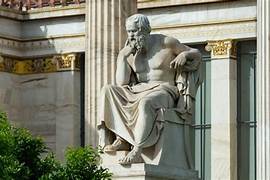
If morality transcends politics and the laws of the state doesn’t that mean that our laws are weak and that anyone can break them, if one’s conscience so instructs? One might think here of the figures of Socrates, Antigone, Thoreau, and other morally propelled individuals of Western culture. If morality transcends politics does this lead to a loose society wherein people do not respect law or authority?
However, if politics transcends morality, does that mean that politics is a unique condition of life, a model of how to live with and among others? If politics transcends morality because people will not live by and be constrained by moral principles, does that mean morality is mere expediency of self-advantage and non-existent as a transcendent guide of behavior? If morality does not effectively apply to politics, then to what does it apply and why? What might effectively serve both the pragmatic order of the body politic and abstract individual values? What lived experience and quality might help forge a mind disciplined to be simultaneously more abstract and more concrete?
Alfred North Whitehead asserted that a “sense of style,” what he saw as the last acquisition of an educated mind and pervades one’s entire being, was essential. Style is intimate with knowledge and power. In “The Aims of Education,” Whitehead pointed out, “Style is the fashioning of power, the restraining of power.” Style, across all human sectors – science, literature, art, social engagement – is about accomplishment and constraint. In the arts, for example, a performer gives oneself to the generic constraints of a metier, while simultaneously satisfying one’s personal goals and aspirations. As Whitehead knew, “With style your power is increased, for your mind is not distracted with irrelevancies, and you are more likely to attain your object.” The style of everyday life among others and the earth in community calls for citizens to live aesthetically as unique works of relational art.